What Size Air Conditioner Do I Need? A Homeowner’s Sizing Guide
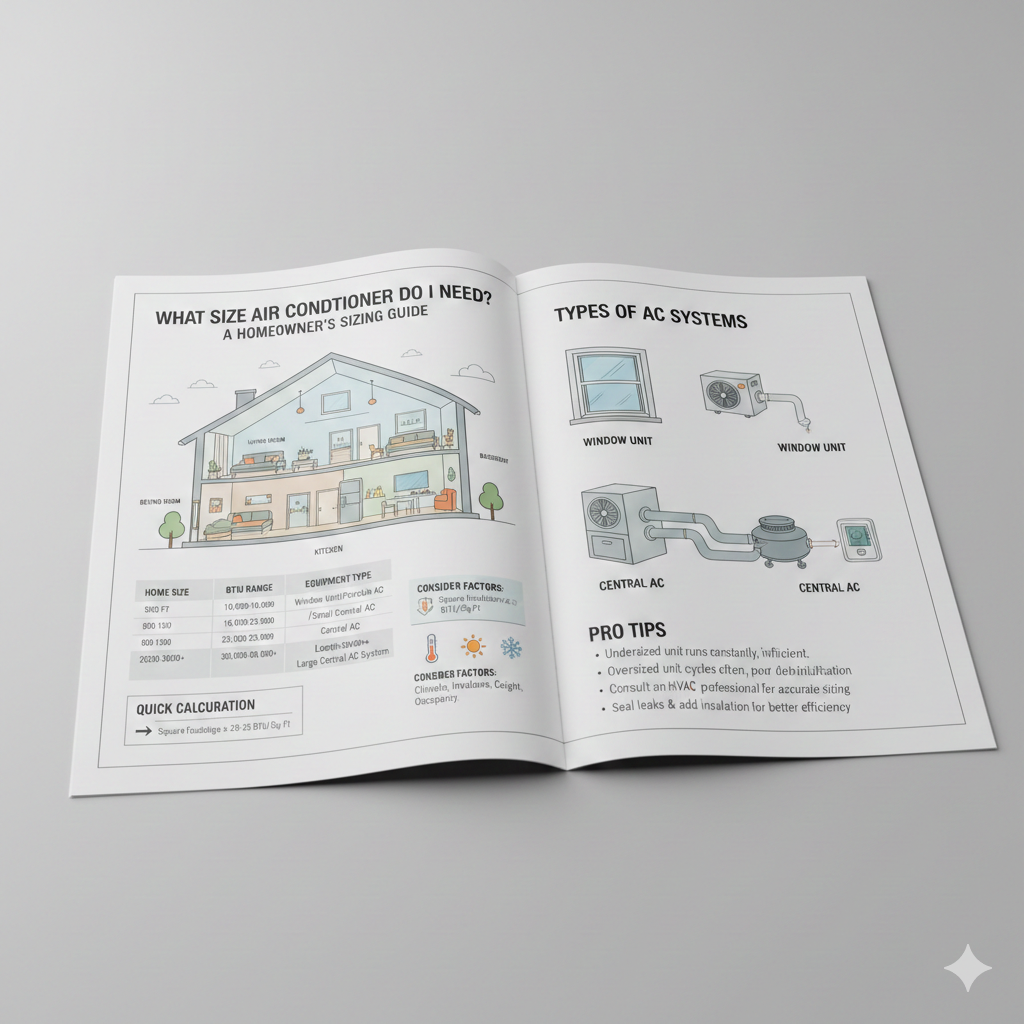
Choosing a new air conditioner involves a critical first question: what size air conditioner do I need? The answer is not about physical dimensions, but cooling capacity. Selecting the correct size is the most important decision for efficiency, comfort, and system longevity. An air conditioner that is too large or too small can lead to higher energy bills, poor humidity control, and frequent repairs.
This guide explains how professional HVAC sizing works, moving beyond simple square-footage rules. You will learn the key factors that determine capacity, understand the concept of BTU and tonnage, and discover why a Manual J calculation performed by a qualified technician is the only reliable method. This knowledge will prepare you to evaluate estimates and ensure your new system is sized correctly for your specific home.
Why Correct AC Sizing Is Non-Negotiable
Sizing an air conditioner is about matching its cooling output to your home’s unique heat gain. It is a precise calculation, not a guess. The consequences of incorrect sizing are significant and costly.
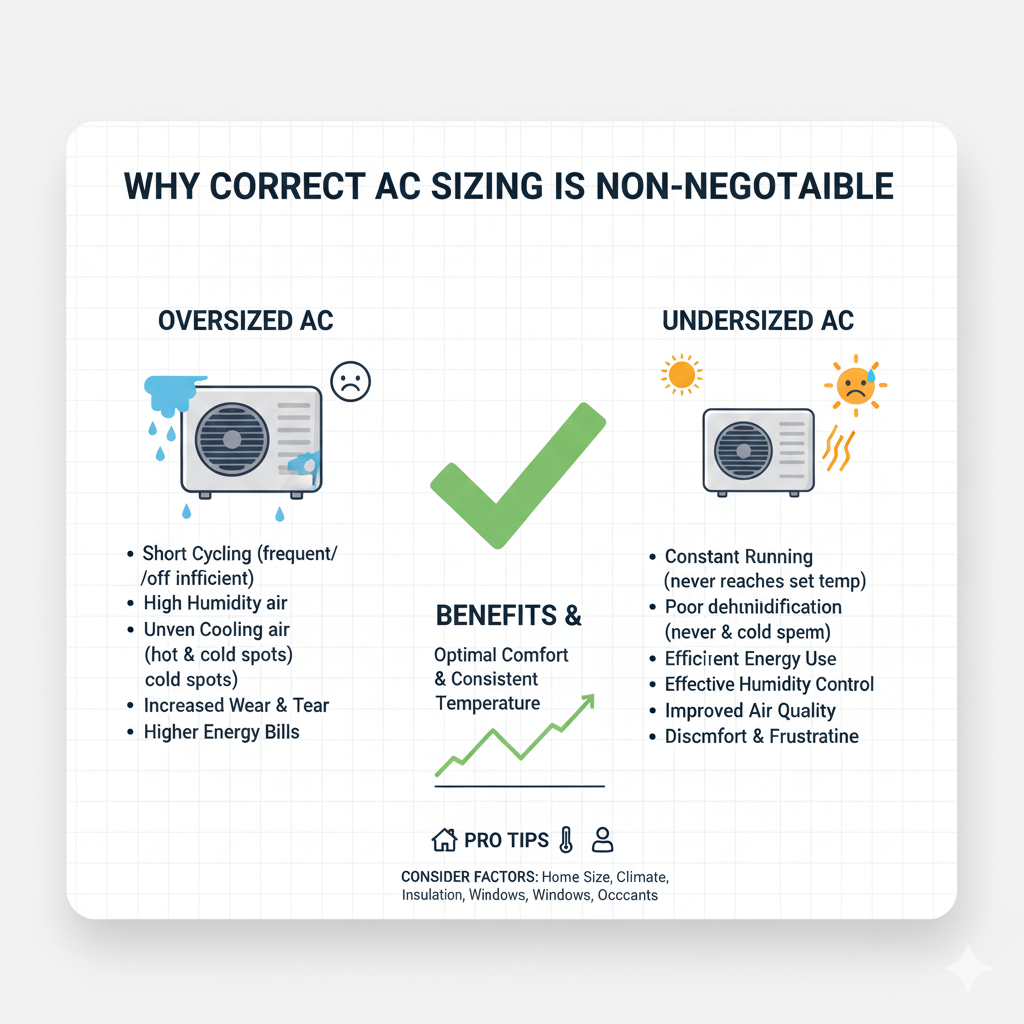
Problems with an Oversized AC Unit:
- Short Cycling: The unit cools the space too quickly and shuts off, only to restart again minutes later. This frequent on/off cycling wastes energy and causes excessive wear on the compressor.
- Poor Humidity Control: Air is cooled but not adequately dehumidified because the system doesn’t run long enough to remove moisture from the air, leading to a cold, clammy feel.
- Higher Upfront Cost: You pay for more cooling capacity than you need.
- Inconsistent Temperatures: Can create hot and cold spots throughout the home.
Problems with an Undersized AC Unit:
- Constant Running: The unit runs continuously in an attempt to reach the thermostat setting, drastically increasing energy consumption.
- Inadequate Cooling: It will never comfortably cool your home on the hottest days, leading to discomfort.
- Premature Failure: The non-stop operation puts extreme stress on all components, leading to early system breakdowns.
The Basic Language of AC Sizing: BTUs and Tons
Capacity is measured in BTUs and tons.
- BTU (British Thermal Unit): A measurement of heat energy. One BTU is the amount of heat required to raise one pound of water by one degree Fahrenheit. In air conditioning, it refers to how much heat a unit can remove from your home per hour (BTU/h).
- Tonnage: In HVAC, a “ton” refers to 12,000 BTUs per hour of cooling capacity. It originates from the amount of heat needed to melt one ton of ice in 24 hours. Residential systems typically range from 1.5 tons (18,000 BTU/h) to 5 tons (60,000 BTU/h) or more.
A common but flawed rule of thumb suggests you need 1 ton of air conditioning for every 400-600 square feet. This rule ignores too many variables to be reliable and should only be used for a very preliminary, non-binding estimate.
Key Factors in a Professional AC Sizing Calculation (Manual J)
A proper load calculation, known as a Manual J calculation, is the industry standard. It is a complex software- or worksheet-based assessment that considers all the following factors specific to your home:
- Square Footage: The total floor area to be cooled is the starting point.
- Climate Zone: Your local weather data, particularly design temperatures (the typical extreme heat for your area), is a fundamental input.
- Home Insulation: The quality and amount of insulation in your attic, walls, and floors dramatically affect heat gain.
- Windows and Doors: The number, size, type (single/double/triple-pane), orientation (north, south-facing), and shading of all windows and exterior doors.
- Air Infiltration: The natural leakage of air through cracks, seals, and vents impacts the cooling load.
- Ceiling Height: Rooms with vaulted or high ceilings have a greater volume of air to condition.
- Occupancy and Appliances: The number of people and the heat generated by lights, kitchen appliances, and electronics add to the cooling demand.
Practical Value: A Step-by-Step Overview of the Sizing Process
While you cannot perform a full Manual J yourself, understanding the professional’s process is valuable. Here is what a proper HVAC sizing assessment should look like.
Step 1: The Home Evaluation
A technician should conduct a walkthrough, measuring rooms, inspecting insulation in the attic, noting window types, and assessing ductwork condition. They are not just looking at your old unit.
Step 2: The Load Calculation
Using the collected data, the technician inputs it into Manual J software. This calculates the precise BTU per hour heating and cooling loads for your home. This is your target number.
Step 3: Equipment Selection
The recommended air conditioner’s capacity (in BTUs or tons) should match the calculated cooling load as closely as possible. Technicians will select from available models to meet this target.
Step 4: Review and Questions
A reputable contractor will explain their findings and how they arrived at the recommended AC tonnage. You should feel comfortable asking questions about the factors that influenced the size.
What Homeowners Can Do: A Pre-Consultation Checklist
Before you get estimates, you can gather useful information. This checklist will make your conversation with HVAC contractors more productive and help you evaluate their thoroughness.
For a Sizing Consultation, Know Your Home’s Details:
- Total living square footage.
- Approximate year of construction (indicates likely insulation levels).
- Number, size, and type of windows (e.g., double-pane, single-pane).
- Type of insulation in the attic and its approximate depth (if accessible).
- Number of occupants regularly in the home.
- Any persistent comfort issues with your old system (e.g., certain rooms are always warmer).
Questions to Ask Every Contractor:
- “Will you perform a full ACCA Manual J load calculation?”
- “Can you walk me through the major factors affecting the load in my home?”
- “What size (in BTUs and tons) are you recommending, and how does it match the calculated load?”
- “What is the model’s SEER2 rating?” (This indicates efficiency).
Common Mistakes and Misconceptions About AC Size
- “Replacing with the Same Size.” Your old unit may have been incorrectly sized. Furthermore, home improvements like new windows or attic insulation can change your cooling requirements. Always recalculate.
- “Bigger is Better.” As outlined, an oversized AC is a source of problems, not a benefit. It does not cool “more” or “better.”
- “Online Calculators Are Accurate.” Simple online BTU calculators that only use square footage and zip code are deeply flawed. They omit critical variables and should not be used for final decisions.
- “The Salesperson Did a ‘Quick Calculation.’” A reliable size recommendation cannot be made in a few minutes without measurements and data collection.