
AC Maintenance Checklist for Homeowners: Seasonal DIY Tasks
While professional annual service is crucial, there are several important maintenance tasks homeowners can and should perform themselves. A proactive approach with a simple AC maintenance checklist can improve your system’s efficiency, extend its lifespan, and help you spot minor issues before they become major repairs. This checklist focuses on safety, clarity, and tasks that do not require specialized HVAC tools or licensing.
This guide provides a seasonal, step-by-step checklist of essential DIY air conditioner maintenance. We will outline tasks for the spring (pre-cooling season), ongoing summer upkeep, and fall (post-season), with clear instructions and safety warnings. The goal is to empower you to take an active role in your system’s care, supporting the work done by your HVAC professional and ensuring consistent comfort and performance.
Safety First: Essential Rules for DIY Maintenance
Before starting any task, follow these rules:
- Turn Power OFF: Always switch the thermostat to “OFF.” Then, turn off the electrical power to both the outdoor condenser unit and the indoor air handler/furnace at their dedicated circuit breakers.
- Allow Components to Cool: If the system has been running, wait at least 30 minutes for the compressor and other parts to cool down before touching them.
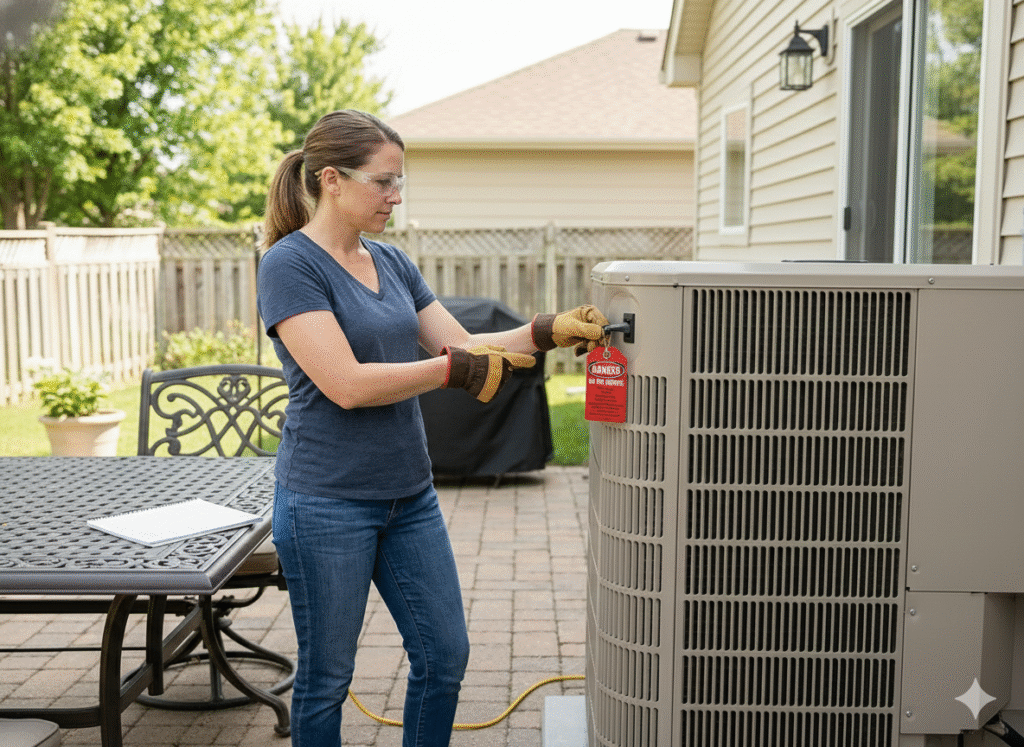
Use Proper Tools: Wear gloves and safety glasses. Use a fin comb for coils, not a screwdriver or knife.
Know Your Limits: This checklist covers external, non-technical tasks. Do not attempt to open sealed refrigerant systems, repair electrical components, or work on anything you are uncomfortable with. When in doubt, call a pro.


Spring Checklist: Pre-Season Preparation (Before Summer Heat)
Perform these tasks annually, ideally in late spring.
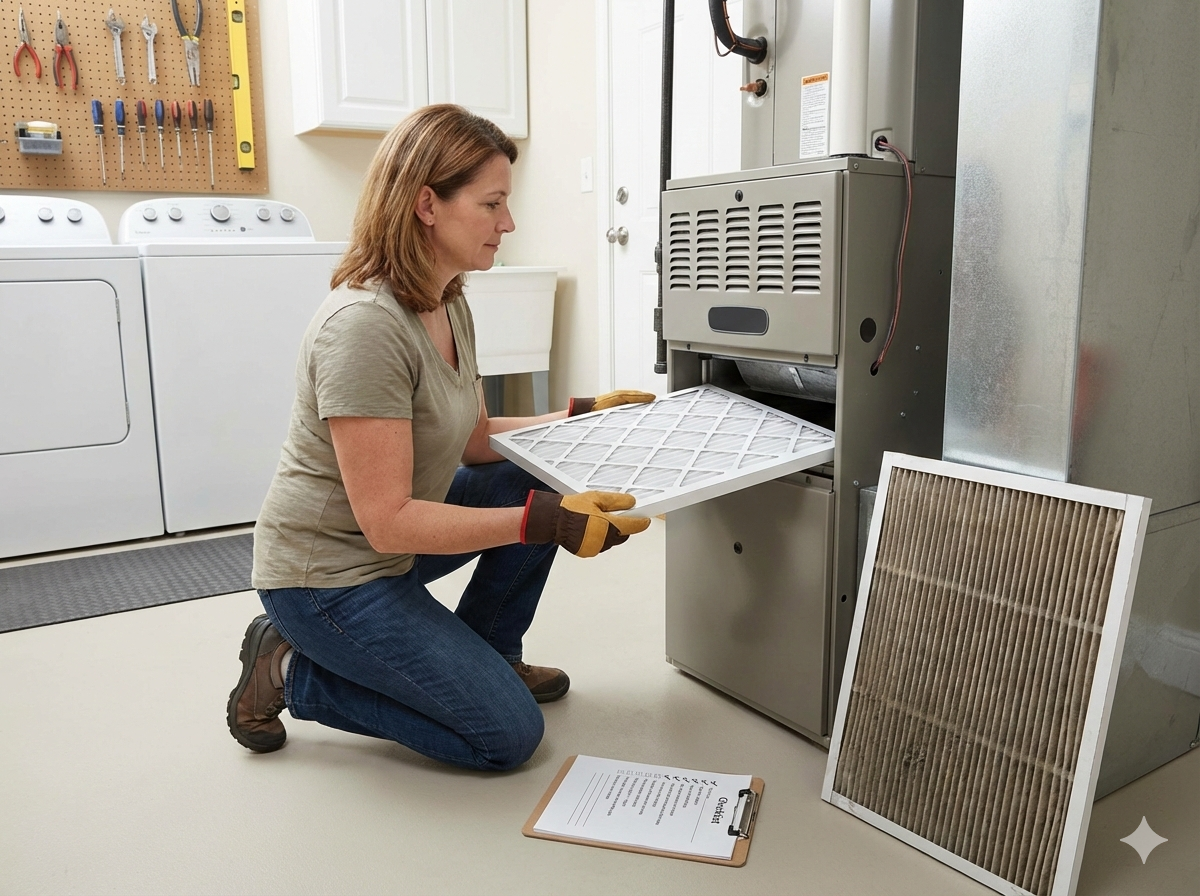
1. Replace or Clean Your Air Filter
- Task: Locate your filter (in the return air duct, blower compartment, or wall grill). Insert a new, properly sized filter. If you have a permanent filter, clean it according to the manufacturer’s instructions.
- Why: This is the #1 most important homeowner task. A clean filter protects the evaporator coil and maintains proper airflow.
2. Clean Around the Outdoor Condenser Unit
- Task: Remove any leaves, pine needles, grass clippings, or debris from the top and sides of the unit. Trim back any shrubs, vines, or plants to ensure at least 2-3 feet of clearance on all sides.
- Why: Proper airflow is critical for the condenser to expel heat. Blockages cause the system to work harder and overheat.
3. Gently Clean the Condenser Coil Fins
- Task: With power OFF, remove the outer protective grille (if easily detachable). Use a fin comb to carefully straighten any bent fins. Then, spray the coil from the inside out with a garden hose on a gentle setting to wash away dirt. Never use a pressure washer.
- Why: Dirty coils reduce efficiency and can cause the system to overpressure and shut down.
4. Inspect the Condensate Drain Line
- Task: Locate the PVC drain line exiting your home near the foundation. Pour one cup of distilled white vinegar into the drain line’s access point (usually a T-shaped vent near the air handler) to inhibit algae and mold growth.
- Why: Prevents clogs that lead to water leaks and system shut-offs.
5. Check the Refrigerant Lines
- Task: Visually inspect the two copper lines running between the indoor and outdoor units. The larger, insulated line is the suction line. Ensure the insulation is intact and not missing or crumbling.
- Why: Missing insulation reduces efficiency and can cause the line to sweat, leading to water damage.
Summer Checklist: Monthly & Ongoing Upkeep
These are quick checks to perform during the cooling season.
1. Monitor Air Filter Monthly
- Task: Check your filter every month during peak usage. Replace it when it looks dirty, regardless of the scheduled time frame.
- Why: High summer usage loads filters faster.
2. Listen for Unusual Noises
- Task: Periodically listen to your outdoor unit when it starts and runs. Note any new grinding, screeching, or loud buzzing sounds.
- Why: Early detection of strange noises can signal a problem needing professional attention.
3. Feel for Weak Airflow
- Task: Place your hand over a few supply vents to ensure strong, cool airflow is present.
- Why: Weak airflow can indicate a dirty filter, a failing blower motor, or duct issues.
Fall Checklist: Post-Season Shutdown (Optional, for Cold Climates)
If you live in a region with freezing winters, consider these tasks after your last cooling use.
1. Clean the Area Again
- Task: Clear any fallen leaves or debris from around the outdoor unit to prevent rust and pest habitation.
- Optional – Cover the Top: You can place a breathable, mesh cover over the top of the unit to keep out leaves and debris. Never wrap the entire unit in a plastic tarp, as this traps moisture and invites rodents.
2. Consider a Thermostat Setting
- Task: If you have a programmable thermostat, you can set it to a “away” or higher temperature setting for winter, or simply switch it to “OFF” on the cooling mode.

What NOT to Do: Tasks for Professionals Only
It is critical to understand the boundary between homeowner and professional service. Do not attempt:
- Checking or Adding Refrigerant: This requires a license and specialized equipment. “Recharging” is not routine maintenance; low refrigerant indicates a leak.
- Opening Electrical Panels: Testing or replacing capacitors, contactors, or wiring inside the high-voltage compartments.
- Internal Repairs to the Compressor or Motors.
- Cleaning the interior of the Evaporator Coil if it requires disassembly to access.
Practical Value: Printable/Shareable Checklist Summary
Spring (Pre-Season) AC Maintenance:
- Replace/Clean Air Filter
- Clear debris from around outdoor unit (2-3 ft clearance)
- Straighten condenser coil fins & rinse gently with hose
- Pour vinegar down condensate drain line
- Inspect refrigerant line insulation
- Turn power back ON & test system operation
Summer (Monthly):
- Check & replace air filter as needed
- Listen for unusual operating noises
- Feel vents for proper cool airflow
Fall (Post-Season, Cold Climates):
- Clear final debris from outdoor unit
- Optional: Use a breathable top cover
- Adjust thermostat settings for winter