AC Blowing Warm Air? 7 Common Causes & What to Do | ACservices
Discovering your air conditioner is blowing warm air on a hot day is a frustrating and concerning experience. The system is running, but it fails to deliver the cool air you expect. This symptom indicates your AC is not completing its core function of removing heat from your home. Understanding the potential causes for an AC blowing warm air helps you perform basic safety checks, communicate clearly with a technician, and avoid unnecessary costs.
This guide lists the most common reasons an air conditioner loses its cooling capacity, ordered from simple, owner-addressable issues to complex mechanical failures. We will explain each cause in plain language, outline the basic diagnostic logic a professional might follow, and provide clear guidance on what a homeowner can safely check versus when a certified HVAC technician is required. Our goal is to give you the knowledge to respond calmly and effectively to this common problem.
Rule Out the Simplest Causes First: Thermostat and Airflow
Before assuming a major repair, always check these two straightforward settings and components. They are the most common culprits and the easiest to verify.
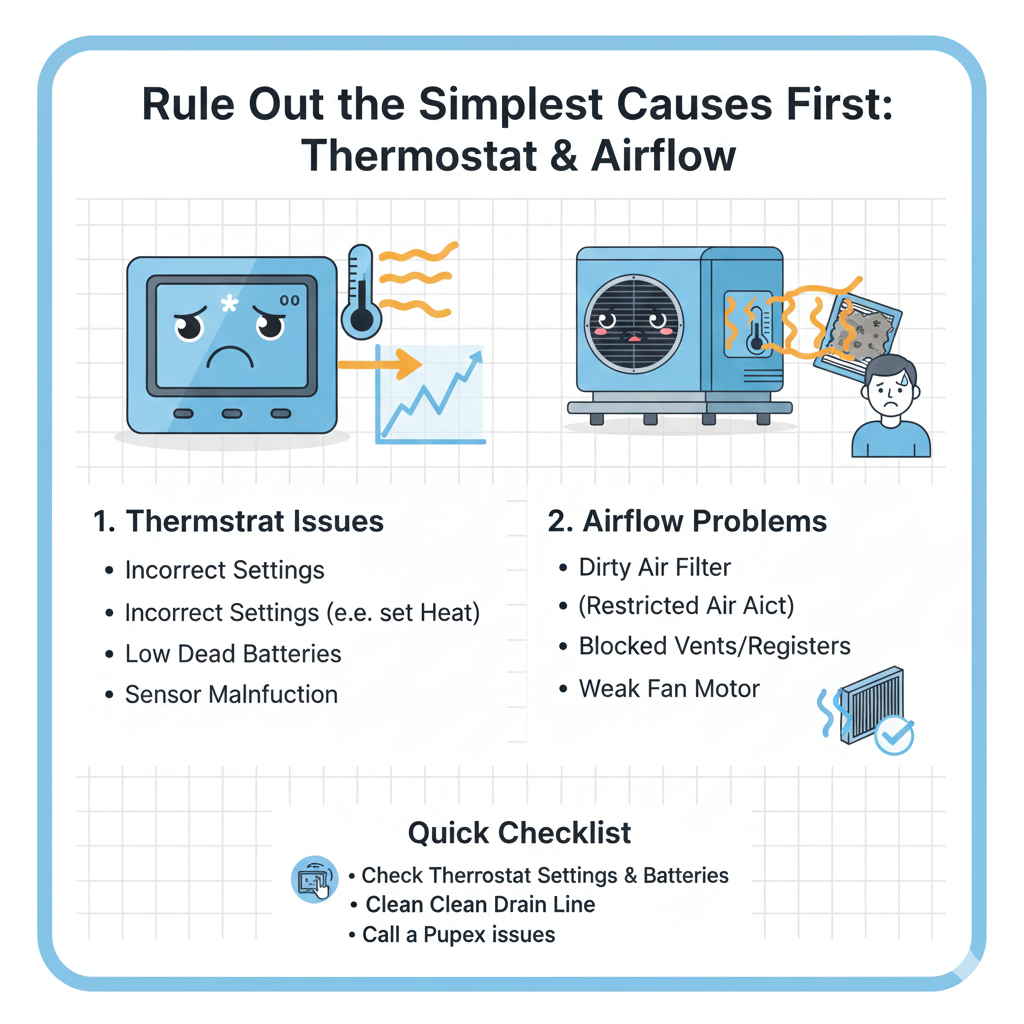
1. Incorrect Thermostat Settings
This is the fastest check. Ensure your thermostat is:
- Set to “COOL” mode, not “HEAT” or “FAN ONLY.”
- The temperature setting is several degrees below the current room temperature.
- The display is active. If it’s blank, check batteries or circuit breakers.
2. A Severely Dirty or Clogged Air Filter
A filter caked with dust and debris is a primary cause of reduced cooling. It restricts airflow across the indoor evaporator coil. When not enough warm indoor air passes over the coil, the refrigerant inside cannot absorb enough heat. This can cause two issues:
- Insufficient Cooling: The air coming from your vents feels barely cool or warm.
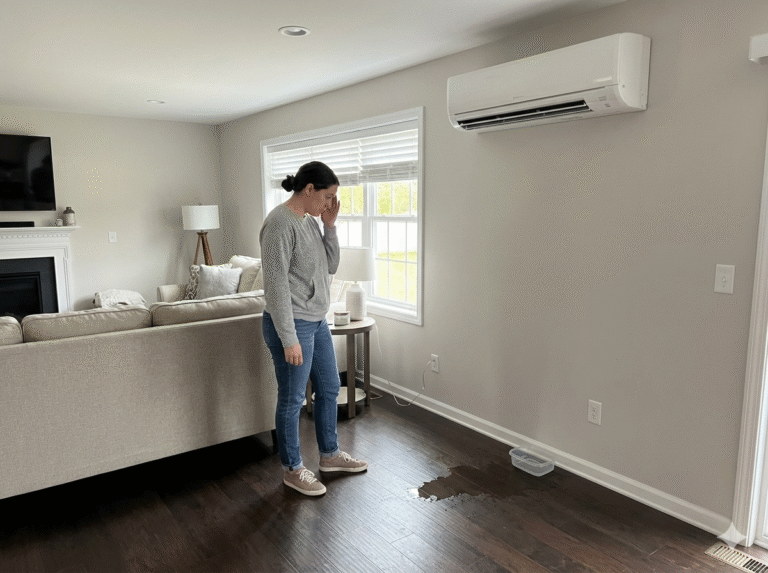
- Frozen Coil: Restricted airflow can actually cause the evaporator coil to freeze. A layer of ice further blocks airflow, and once the system cycles off and the ice melts, it can result in water leaks and a blast of warm air.
- Homeowner Action: Locate your air filter, inspect it, and replace it if it’s dirty. This should be done every 1-3 months.
Intermediate Issues: Refrigerant and Electrical Problems
If the thermostat and filter are correct, the next set of potential causes involves the core refrigeration cycle or system controls. These typically require a professional to diagnose and repair.
3. Low Refrigerant Charge (A Refrigerant Leak)
Refrigerant is the lifeblood of the cooling cycle; the system does not “use it up.” A low charge almost always indicates a refrigerant leak.
- Why It Causes Warm Air: With insufficient refrigerant, the system cannot absorb enough heat from your indoor air. You may also notice ice forming on the copper refrigerant lines or the outdoor unit.
- Professional Service Required: A technician must locate the leak, repair it, and then properly recharge the system to the manufacturer’s specification. Simply adding refrigerant is not a fix.
Related Posts

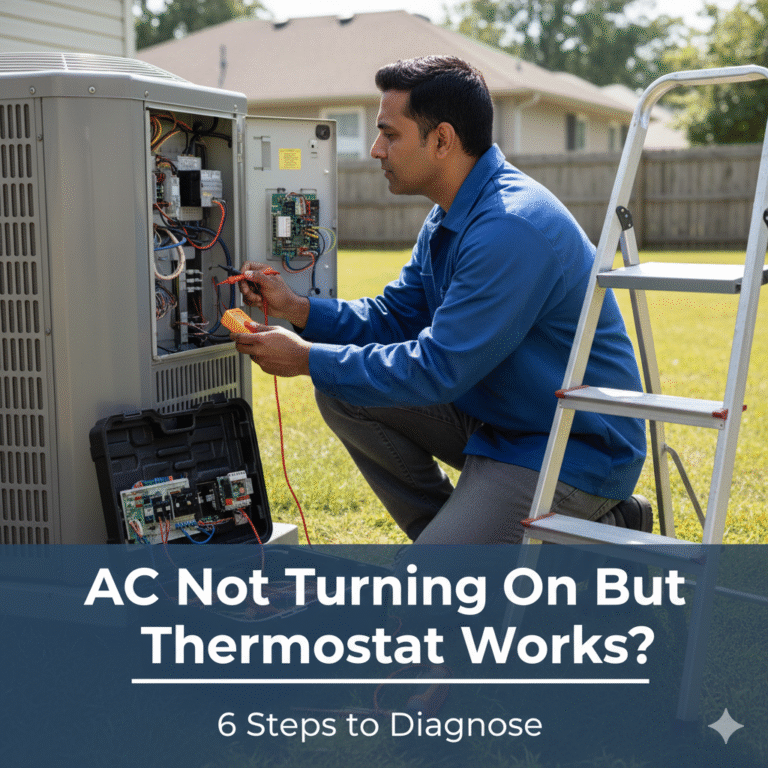
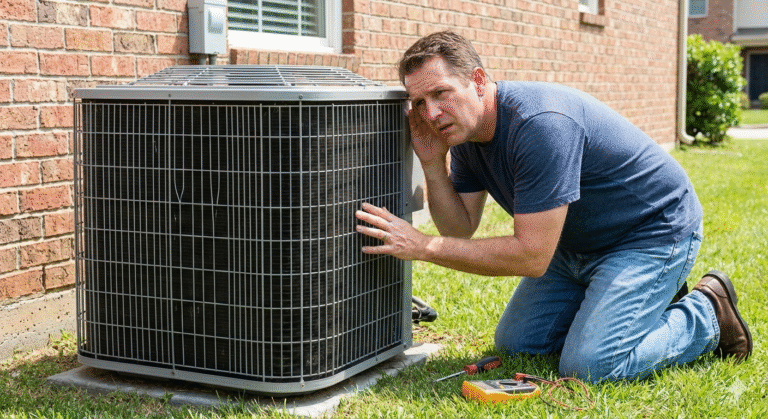
4. Dirty or Blocked Condenser Coil
The outdoor condenser unit needs to expel the heat absorbed from inside your home. If the coil is clogged with dirt, leaves, or grass clippings, it cannot release that heat effectively.
- Why It Causes Warm Air: The high-pressure refrigerant can’t condense properly, backing up the entire heat-removal process. The system may overheat and shut down (trip on a safety switch) or blow warm air.
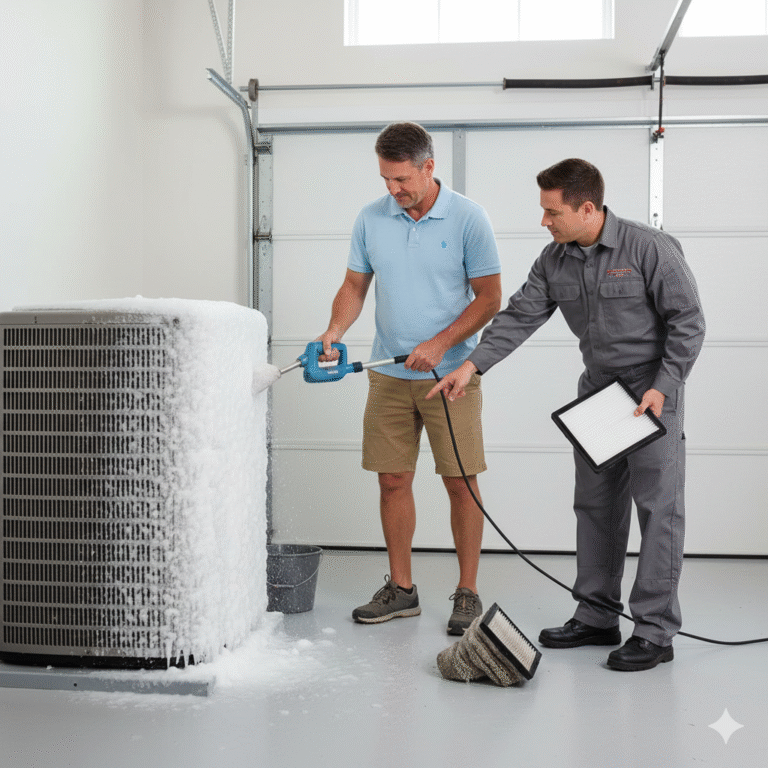
- Homeowner Check & Action: Ensure the outdoor unit has at least 2-3 feet of clear space on all sides. You can gently spray the coil with a garden hose (with the power OFF) to clean superficial dirt, but deep cleaning requires a professional service.
5. Faulty or Failing Compressor
The compressor is the pump that circulates refrigerant. If it fails, the refrigeration cycle stops entirely.
- Why It Causes Warm Air: No refrigerant circulation means no heat absorption. The outdoor unit may hum but not start, or it may trip the breaker repeatedly.
- Signs: Loud humming, clicking, or tripped breakers at the outdoor disconnect or main panel.
- Professional Service Required: Compressor diagnosis and replacement is a significant repair.
Complex System Failures
These are less common but result in a complete loss of cooling. Diagnosis requires specialized tools and knowledge.
6. Issues with the Contactor or Capacitors
These are electrical components in the outdoor unit that help start and run the fan and compressor.
- Contactor: A relay that switches power to the compressor and fan. If pitted or welded, it can prevent the compressor from starting.
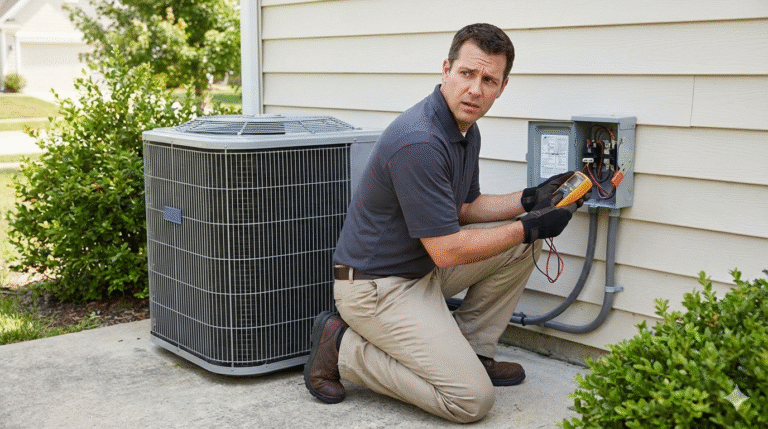
- Capacitor: Provides the extra jolt of energy to start the motor (start capacitor) or keep it running smoothly (run capacitor). A weak or failed capacitor will prevent the compressor or fan from starting, though you may hear a humming sound.
- Professional Service Required: Electrical testing and component replacement.
7. A Faulty Reversing Valve (Heat Pump Systems Only)
If you have a heat pump, it uses a component called a reversing valve to switch between heating and cooling modes. If this valve gets stuck or fails, the system might run in heating mode when you’ve called for cooling.
- Why It Causes Warm Air: The system is literally operating in reverse, pulling heat from outside and dumping it inside your home.
- Professional Service Required: A technician must diagnose the valve and either repair or replace it.
Practical Value: A Homeowner’s Diagnostic Checklist
Follow this logical sequence to gather information before calling for service. Always turn the system’s power OFF at the thermostat and the circuit breaker before inspecting any components.
Initial Observations:
- Thermostat: Is it set to “COOL” and at a temperature below room temp? Is the display on?
- Air Filter: Is it clean? Replace if dirty.
- Outdoor Unit: Is it running? Listen for the fan and compressor hum. Is it clear of debris/plants?
- Indoor Air Handler: Is the blower fan running? Do you feel any airflow at the vents?
If the outdoor unit is NOT running:
- Check the circuit breaker at the main panel and the outdoor disconnect switch (a small box near the unit).
- Ensure nothing is blocking the condenser fan from turning freely (with power OFF).
If the outdoor unit IS running but blowing warm air:
- Feel the two copper pipes at the outdoor unit (carefully, they can be hot or cold). The larger, insulated suction line should feel very cold. If both are warm, it indicates a refrigerant or compression issue.
- Look for visible ice on the copper lines or the indoor unit.
What to Do Next: When to Call an HVAC Professional
Use this guide to decide on your next step:
- Call a Professional Immediately If: You hear loud grinding or screeching noises, smell burning, see smoke/sparks, or the circuit breaker trips repeatedly. These indicate serious electrical or mechanical failure.
- Call a Professional for Diagnosis If: After checking the thermostat and replacing a dirty filter, the problem persists. Issues related to refrigerant, the compressor, electrical components, or a suspected frozen coil require certified expertise for safe and correct repair.
- What to Tell the Technician: Be prepared to describe what you observed using terms from this guide (e.g., “The outdoor unit is running, but the big copper line is not cold,” or “I replaced the filter, but airflow is still weak from the vents”).