Central, Ductless, or Window Unit? How to Choose Your Home’s Air Conditioner

Choosing a cooling system for your home involves more than just picking a unit that blows cold air. The different types of air conditioners are designed for specific spaces, installation requirements, and homeowner needs. Selecting the right one can impact your home’s comfort, energy bills, and long-term satisfaction with the system.
This guide provides a clear, neutral explanation of the four most common residential cooling systems: central air, split systems, ductless mini-splits, and window units. We will outline how each system operates, its ideal applications, and key considerations for homeowners. By comparing their structures and use cases, this article aims to give you a foundational understanding to help inform your discussions with HVAC professionals.
Understanding the Basic Cooling Principle
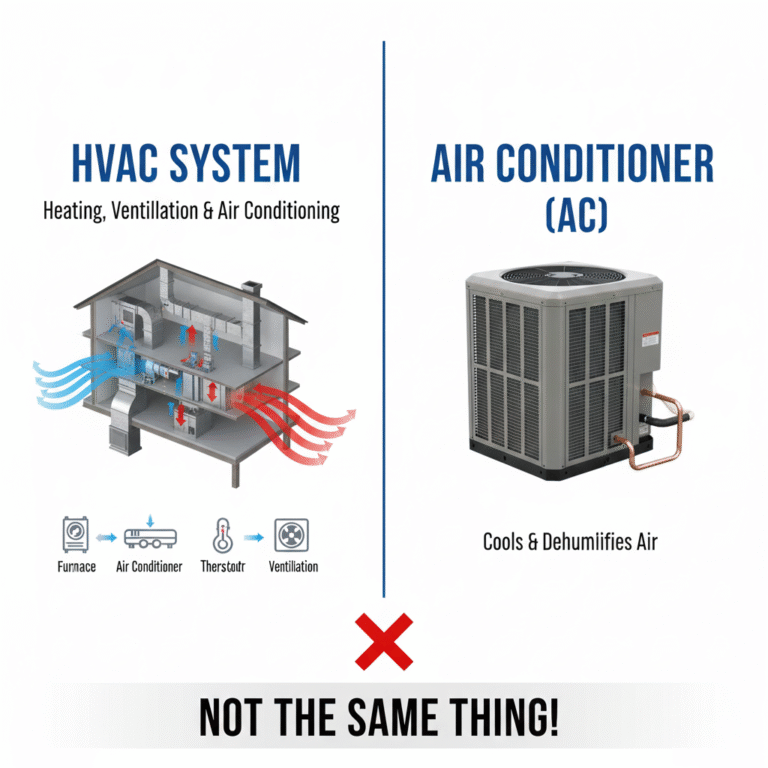
Before exploring the different systems, it’s helpful to know they all operate on the same fundamental principle: removing heat and humidity from indoor air. They use a refrigerant cycle involving an evaporator coil (to absorb indoor heat) and a condenser coil (to release that heat outside). The primary differences lie in how these components are packaged, installed, and how they distribute cool air throughout your home.

1. Central Air Conditioning Systems
A central air conditioner is a whole-home solution integrated with your ductwork. It is the most common system for cooling an entire, single-family house in many climates.
How It Works and Key Components
This system has two main units. An outdoor cabinet (the condenser unit) houses the compressor, condenser coil, and a fan. An indoor unit, typically an evaporator coil installed in your furnace plenum or air handler, works with your home’s existing duct system. Refrigerant lines connect the two. The blower fan in your furnace or air handler circulates warm house air from the return ducts over the cold indoor coil. The cooled, dehumidified air is then pushed back through the supply ducts to vents in each room.
Ideal Use Cases and Homeowner Considerations
- Best For: Cooling entire homes that already have a functioning forced-air ductwork system (often shared with a furnace).
- Pros: Provides uniform cooling throughout the house; out-of-sight components; often increases home resale value; integrates with whole-house air filtration.
- Cons: Requires extensive ductwork; significant upfront installation cost if ducts are not present; can be less efficient if ducts are leaky or poorly insulated; cools the entire house even when only one room is occupied.
2. Split System Air Conditioners (Mini-Split Precursor)
The term “split system” in HVAC broadly refers to any system where key components are separated into indoor and outdoor units. In common usage, it often describes a single, ducted system that functions identically to central air but is designed for a smaller, specific zone, like an addition or a single floor.
Structure and Common Applications
It consists of one outdoor condenser unit connected to one indoor air handler (with its own small duct system) or a single wall-mounted unit. This is not a multi-zone system. It is a dedicated solution for a defined space.
- Best For: Cooling a home addition, finished basement, or a specific zone where extending the main home’s ductwork is impractical or too costly.
- Key Distinction: While operationally similar to central air, a “split system” in this context is typically a targeted solution for space-specific cooling, not whole-home coverage.
3. Ductless Mini-Split Systems
Ductless mini-splits are highly versatile systems that have gained significant popularity. They consist of one outdoor condenser unit connected by refrigerant lines to one or multiple indoor air-handling units mounted on walls or ceilings inside the rooms they cool.
How Multi-Zone and Single-Zone Systems Operate
A single-zone system has one outdoor unit linked to one indoor unit. A multi-zone system has one outdoor unit connected to two, three, or four indoor units in different rooms, each with independent temperature control. Each indoor unit blows cooled air directly into its immediate space, eliminating the need for ducts.
Ideal Use Cases and Homeowner Considerations
- Best For: Homes without existing ductwork (older homes, room additions), for room-specific cooling (home offices, sunrooms), or for adding air conditioning to specific zones to supplement a central system.
- Pros: No ductwork needed; allows for individual room temperature control (zoning); generally high energy efficiency; quiet operation; relatively flexible installation.
- Cons: Higher upfront cost per cooled zone compared to central air; visible indoor wall units require aesthetic consideration; requires professional installation of refrigerant lines through walls.
4. Window Air Conditioning Units
A window AC unit is a single, self-contained appliance that installs in a window or a specially prepared wall sleeve. It houses all components—evaporator, condenser, compressor, and fan—in one compact cabinet.
Function and Typical Installation
The unit sits partly inside and partly outside. The interior side draws in room air, cools it over the evaporator coil, and blows it back into the room. The exterior side expels heat from the condenser coil to the outdoors. It is designed to cool the single room in which it is installed.
Ideal Use Cases and Homeowner Considerations
- Best For: Cooling individual rooms, such as apartments, single bedrooms, or small rentals; temporary or seasonal cooling needs; very low-budget upfront solutions.
- Pros: Very low purchase and installation cost; portable (can be removed and stored); simple installation, often DIY-friendly; no permanent modification to the structure.
- Cons: Cools only one room; blocks window use and light; can be noisy; less energy-efficient for cooling large areas; presents a security consideration; visible from both inside and outside.
Practical Value: Choosing the Right System for Your Scenario
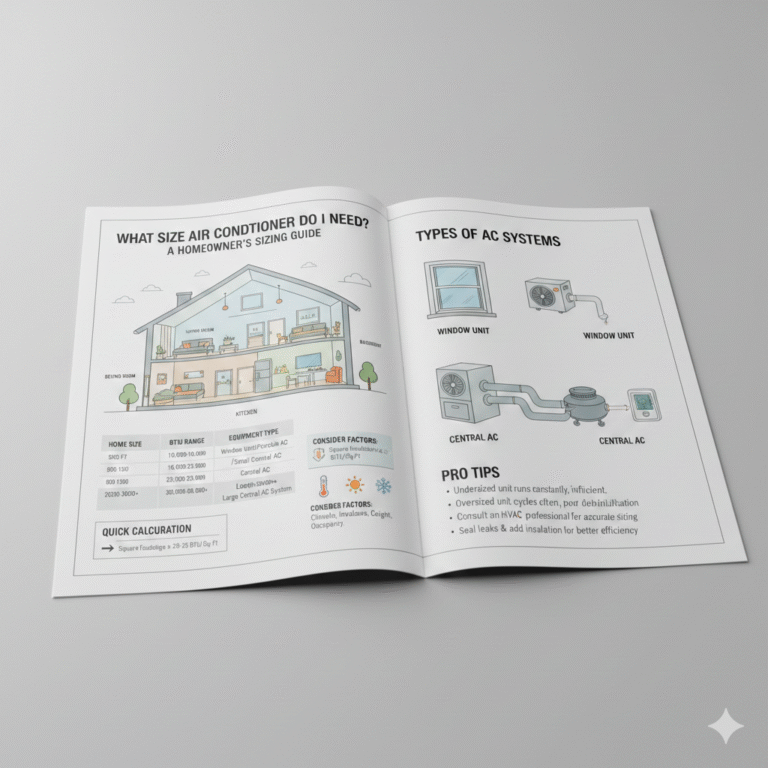
This comparison table summarizes the key factors to help frame your decision. Use it as a starting point for your own needs assessment.
| System Type | Best Suited For | Key Advantage | Key Limitation |
|---|---|---|---|
| Central Air | Whole-home cooling in houses with existing ducts. | Whole-house comfort & integration. | Requires ductwork; higher install cost. |
| Ductless Mini-Split | Rooms/additions without ducts; zoned comfort. | Zoning & no duct needs. | Higher per-zone cost; visible indoor units. |
| Window Unit | Single-room cooling; temporary/low-budget needs. | Very low upfront cost & simple. | One-room only; noisy; blocks window. |

Common Homeowner Scenarios
- “I’m building a new home.” Central air is often the standard, integrated choice. Discuss zoning with your builder.
- “I want to cool my older home with no ducts.” Ductless mini-splits are typically the most effective and efficient whole-home solution.
- “I need to cool just one hot room.” A window unit or a single-zone ductless mini-split are your primary options, balancing budget and permanence.
- “I want to add AC to a finished basement.” A dedicated split system or a ductless mini-split are common professional solutions.
Conclusion
Understanding the different types of home cooling systems—central, split, ductless, and window—is the first step in making an informed decision for your space. Each system offers a different approach to balancing whole-home comfort, zoned control, installation requirements, and budget. Central air and split systems utilize ducts, while ductless mini-splits and window units provide localized cooling.
There is no single “best” option for every homeowner; the right choice depends entirely on your home’s layout, existing infrastructure, and specific comfort goals. This guide provides a neutral framework to help you identify which system type aligns with your situation, forming a solid basis for obtaining estimates and consulting with qualified HVAC contractors.