AC Leaking Water Inside Your House? Here’s Why & How to Fix
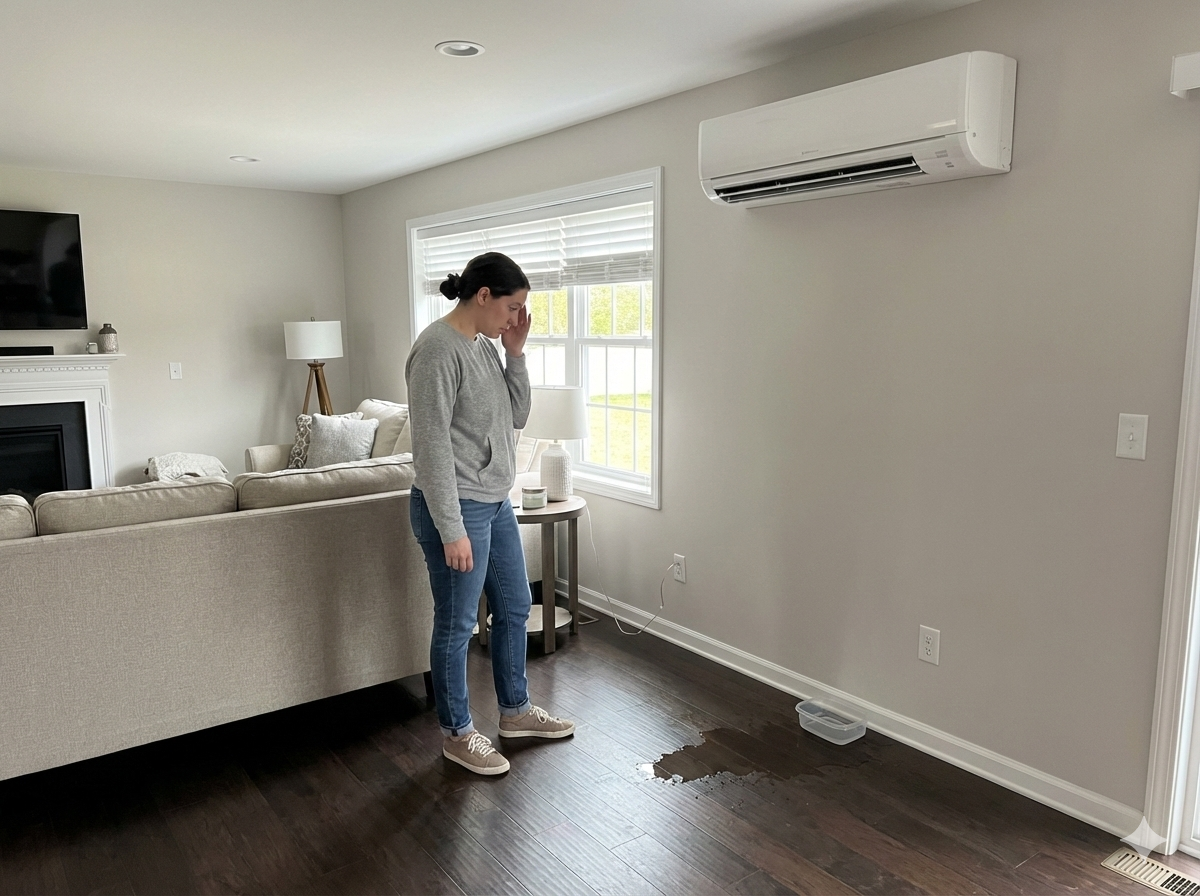
Discovering water leaking from your air conditioner inside your home is an alarming sight. It signals a failure in the system’s condensation management, which can lead to water damage, mold growth, and system inefficiency. While a leaking AC requires attention, the cause is often a common maintenance issue rather than a catastrophic failure. Understanding why this happens and taking swift, correct action can prevent minor problems from becoming major repairs.
This guide explains the most frequent reasons an air conditioner leaks water indoors. We will focus on the condensate drainage system—a key but often overlooked part of your HVAC system. You will learn a step-by-step approach to diagnose the issue, from simple clogs you may address yourself to more complex problems requiring a professional. The goal is to help you stop the leak, mitigate damage, and restore your system to proper operation safely.
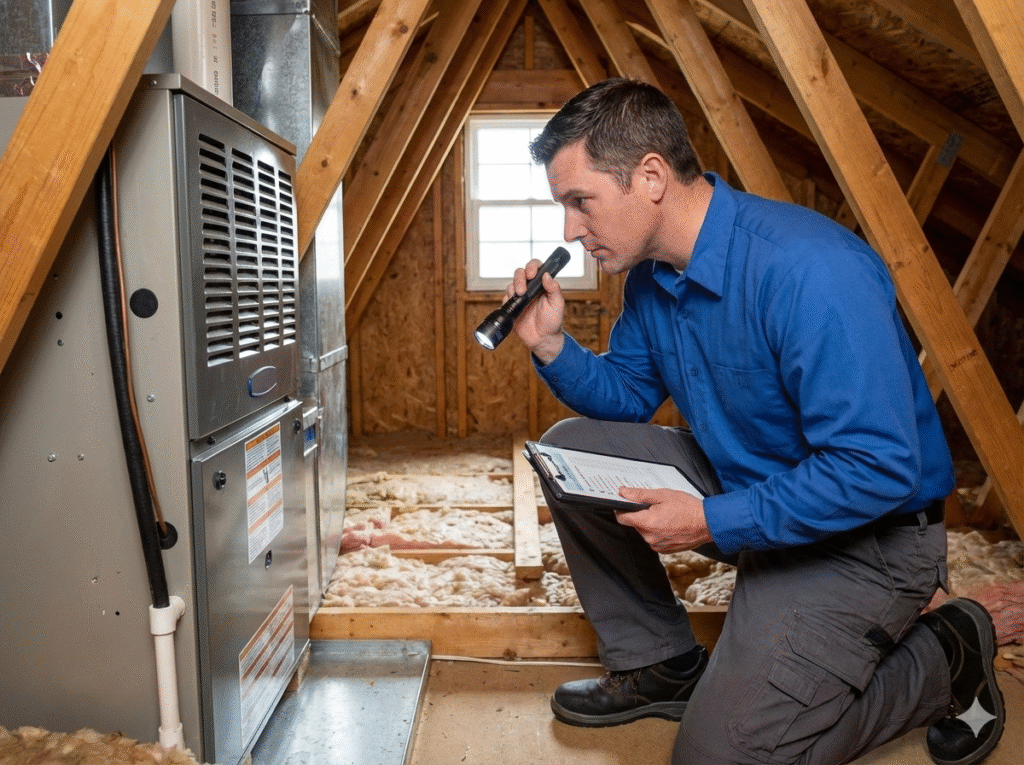
First Step: Locate the Source and Assess the Situation
Before taking action, quickly assess the situation to understand the severity and origin.
- Location of the Leak: Is the water dripping or pooling directly from/beneath the indoor air handler or furnace? Or is it coming from a ceiling or wall near the unit?
- System Operation: Is the air conditioner currently running and cooling, or is it off? Is there reduced airflow or warm air from the vents?
- Visible Signs: Can you see ice on any copper pipes or the indoor unit? Is there an overflow from the primary drain pan?
Immediate Safety Action: If water is near electrical components, turn off the power to the air conditioner and furnace/air handler at the circuit breaker. Place towels or a shallow container to catch dripping water and prevent further damage to floors or ceilings.
Related Posts


How Condensation Forms and Should Drain
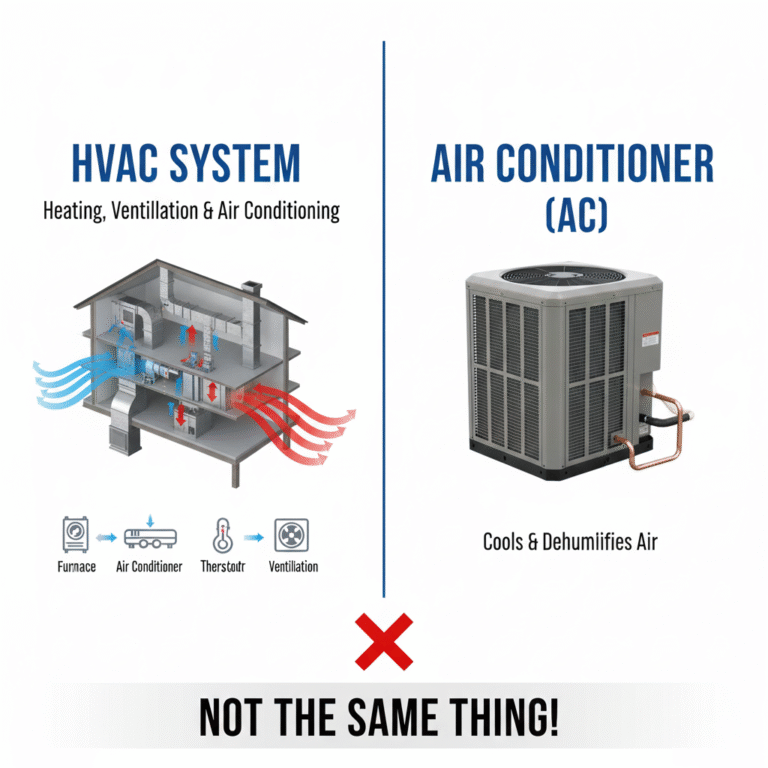
To diagnose a leak, you must understand the normal process. As your AC cools warm, humid indoor air, moisture condenses on the cold evaporator coil—much like water droplets form on a cold glass. This water, called condensate, drips into a sloped drain pan located beneath the coil. From there, it flows by gravity through a condensate drain line (typically a PVC pipe) to a floor drain, utility sink, or outdoors.
A leak inside the house occurs when this water cannot follow its intended path due to a blockage, breakage, or system malfunction.
Common Cause #1: A Clogged Condensate Drain Line
This is the single most common cause of indoor AC leaks. Over time, algae, mold, dirt, and sludge can build up inside the drain pipe.
- Why it Causes a Leak: The clog blocks the path of water. As condensate continues to fill the drain pan, it eventually overflows.
- Signs: Water overflowing from the primary drain pan at the indoor unit. You may also notice musty odors when the AC runs, as stagnant water sits in the line.
- Homeowner Action: Locate where the PVC drain line exits your home (often near the outdoor unit) or find its clean-out tee (a U- or T-shaped fitting near the air handler). You can try pouring a cup of distilled white vinegar into the access point to break up mild algae clogs. For stubborn clogs, a wet/dry vacuum can be used to suction the blockage from the exit point.
Common Cause #2: A Disconnected, Cracked, or Misaligned Drain Line
The PVC drain line can become loose at its connections or develop a crack.
- Why it Causes a Leak: Water escapes at the point of the break or disconnect instead of flowing to the drain.
- Signs: Water leaking from a specific joint in the PVC pipe or from an area of the pipe itself, rather than overflowing the pan.
- Homeowner Check: Visually trace the drain line from the indoor unit to the drain. Look for obvious separations, cracks, or sagging sections that trap water.
Common Cause #3: A Damaged or Rusted Primary Drain Pan
The metal or plastic pan beneath the evaporator coil can rust through (metal) or crack (plastic) over many years.
- Why it Causes a Leak: Water leaks directly through the hole in the pan, bypassing the drain line entirely.
- Signs: Water appears to be coming from the bottom or seams of the air handler cabinet itself, even when the drain line appears clear.
- Professional Service Required: The drain pan is integral to the air handler assembly and often requires a technician to replace.
Common Cause #4: A Frozen Evaporator Coil
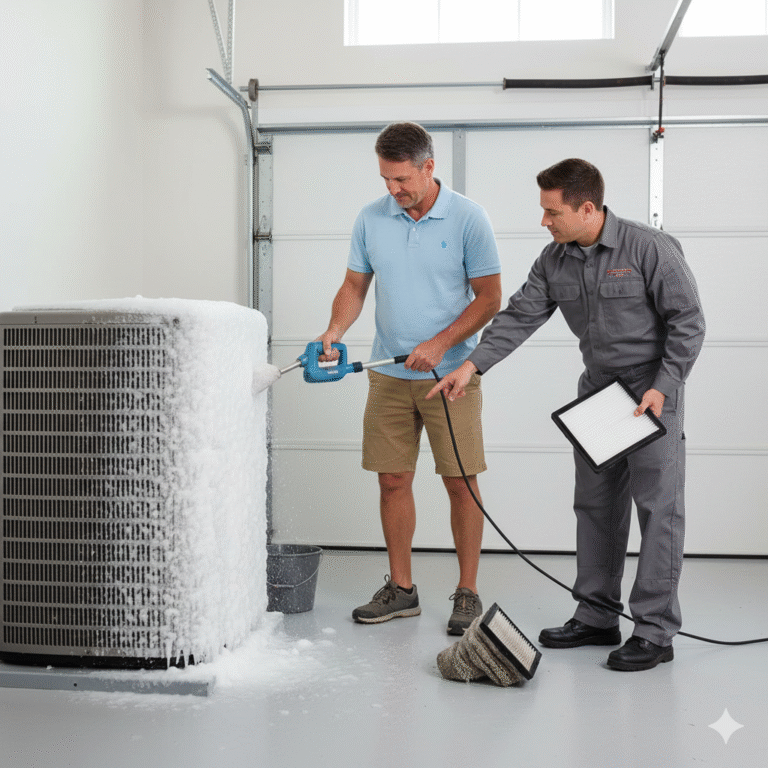
When the evaporator coil freezes over, the ice blocks normal drainage. When the system cycles off or the ice melts, a large volume of water is released at once, overwhelming the drain pan.
- Why it Causes a Leak: Rapid melting causes a surge of water that may overflow the pan.
- Signs: Reduced or no airflow from vents, ice visible on copper refrigerant lines or the indoor unit, and the system may be blowing warm air. The leak often occurs after the system has been off for a while.
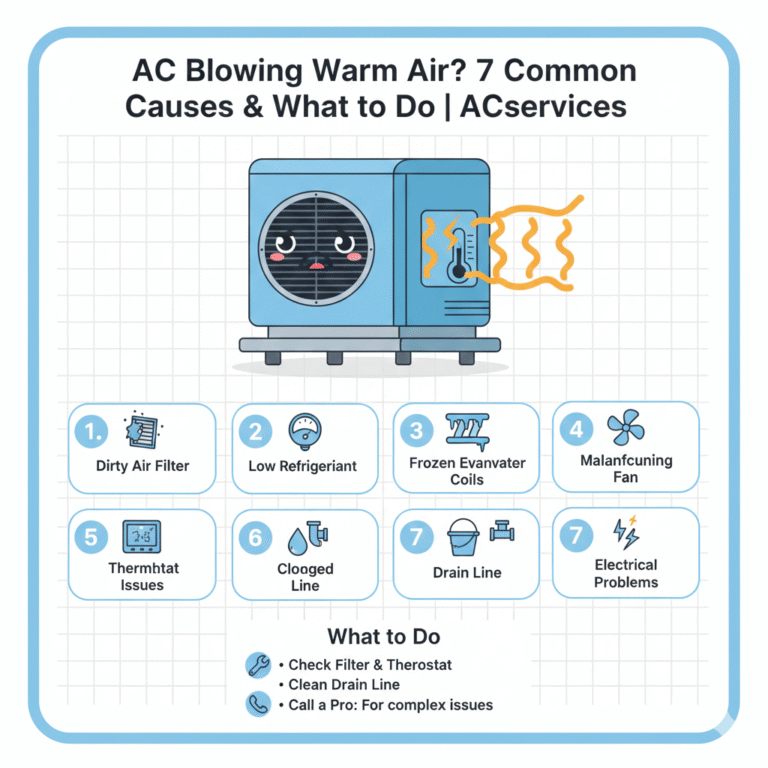
- Root Causes: This is a symptom of other problems: severely dirty air filter, low refrigerant charge, or a failing blower fan. Professional diagnosis is required to fix the underlying issue after thawing the coil.
Common Cause #5: A Failed Condensate Pump (For Systems That Need One)
If your air handler is in a basement, attic, or closet without gravity drainage, it uses a condensate pump to lift water up and out.
- Why it Causes a Leak: A pump can fail due to a stuck float switch, a burned-out motor, or a clog in its small reservoir.
- Signs: Water in or around the pump’s reservoir, a humming sound without pumping action, or an alert light (if equipped).
- Homeowner Check: Ensure the pump is plugged in. You can carefully pour water into the reservoir to see if the float rises and triggers the pump. If not, the pump may need to be cleaned or replaced.
Practical Value: Step-by-Step Diagnostic Checklist
Follow this sequence to identify the leak’s source. Turn off the AC at the thermostat first.
- Step 1: Check the Air Filter. A dirty filter is the most common cause of frozen coils. Replace it if dirty.
- Step 2: Inspect the Drain Pan & Line at the Indoor Unit. Is the primary pan overflowing? Is the PVC line connected?
- Step 3: Clear the Drain Line. Attempt to clear the drain line via the clean-out or exit point using vinegar or vacuum suction.
- Step 4: Look for Ice. Inspect the copper pipes at the indoor unit. If iced, turn the system OFF (fan mode “ON” can help thaw it) and call a pro to diagnose the root cause.
- Step 5: Test the Condensate Pump (if present). Manually trigger the float to see if the pump activates.
What to Do Immediately to Prevent Water Damage
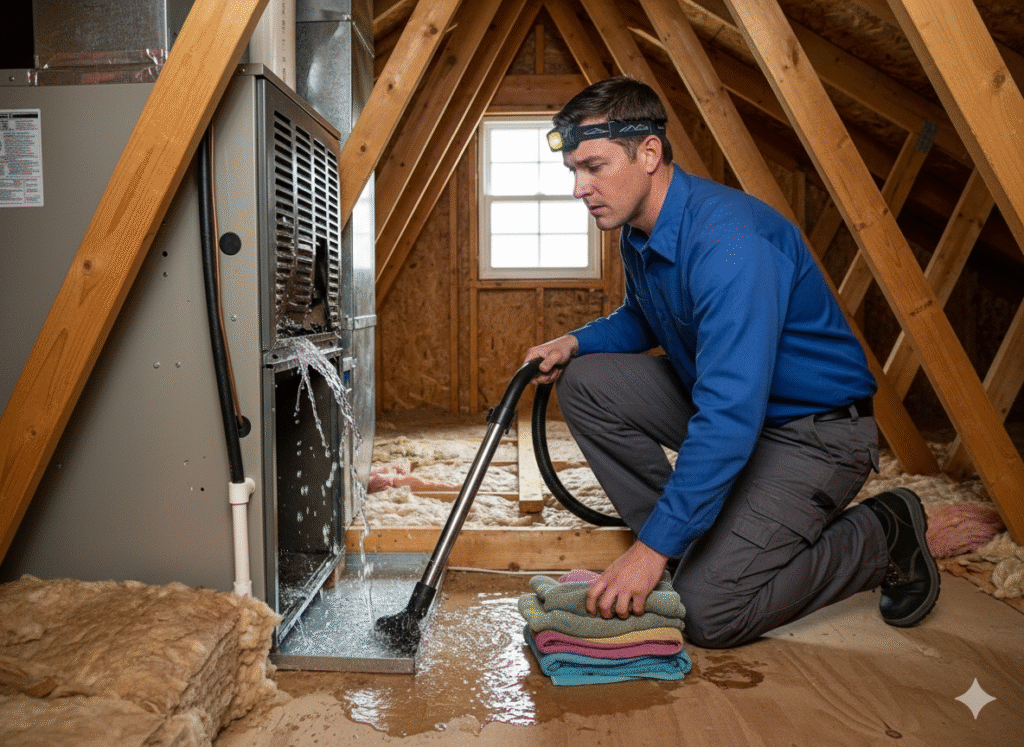
- Turn Off the AC: Switch the thermostat to “OFF” to stop producing more condensation.
- Contain the Water: Place buckets, towels, or a wet/dry vacuum to remove standing water.
- Dry the Area: Use fans and dehumidifiers to prevent mold growth in damp drywall or carpets.
- Call a Professional If: The leak is from a cracked pan, the line is inaccessible, the coil is frozen, or you cannot resolve the clog.
When to Call an HVAC Professional
Contact a certified technician for:
- A suspected refrigerant leak causing a frozen coil.
- A cracked or rusted-through primary drain pan.
- A condensate pump that needs replacement.
- Any leak that continues after you’ve cleared the drain line and replaced the filter.
- If you see ice buildup on the refrigerant lines or evaporator coil.