AC Not Turning On But Thermostat Works? 6 Steps to Diagnose
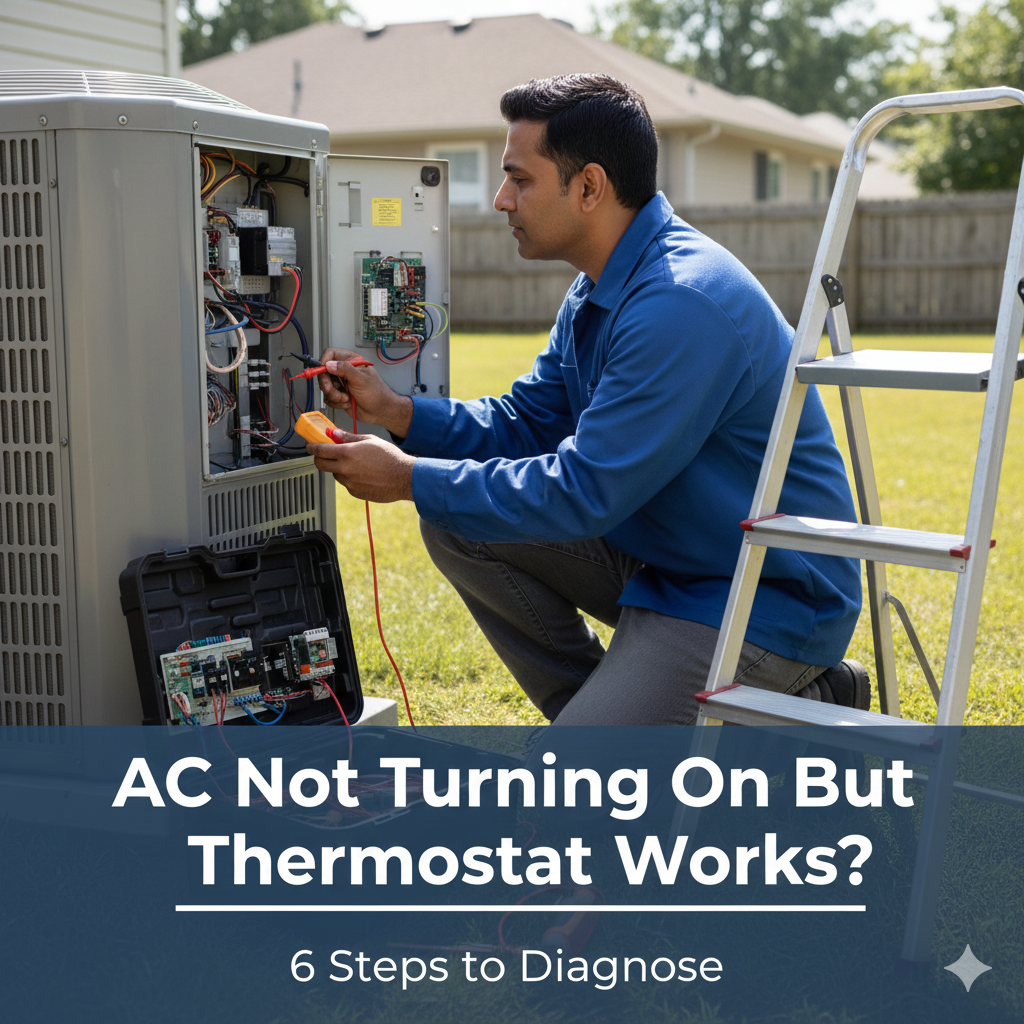
A functional thermostat displaying the correct settings is the first sign you look for when your air conditioner fails. When you find that your thermostat works but the AC won’t turn on, the problem is isolated to the system’s power supply, controls, or safety devices. This scenario can be confusing, as it seems the command is being sent but not received. Understanding the chain of power from your home’s electrical panel to the outdoor unit is key to diagnosing the issue.
This guide provides a logical, step-by-step troubleshooting path for when your air conditioner is completely unresponsive—no sound from the outdoor unit, no fan, no compressor hum—yet your thermostat appears normal. We will focus on electrical and safety-related causes that a homeowner can often identify safely, and clearly indicate when a professional HVAC technician must be called. Safety is paramount; we will specify when to stop and contact a professional.
The Critical First Step: Safety and System Observation
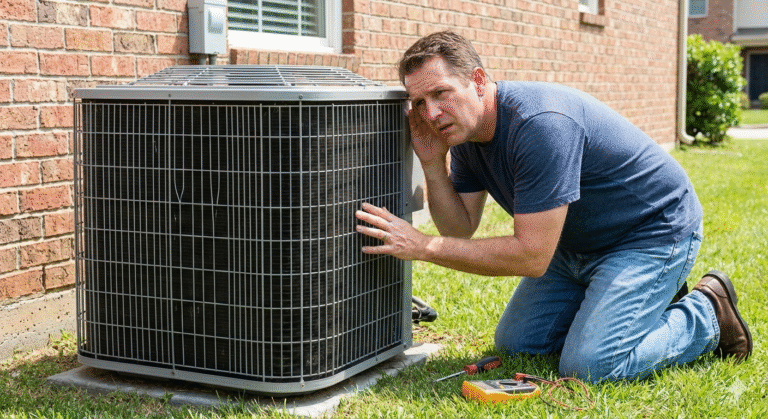
Before touching any equipment, perform a basic observational check. Go to your outdoor condenser unit (the metal cabinet outside). Listen closely. Do you hear any humming sound? Is the fan spinning? Look for any visible signs of damage, overgrown plants blocking airflow, or a significant amount of debris on the unit.
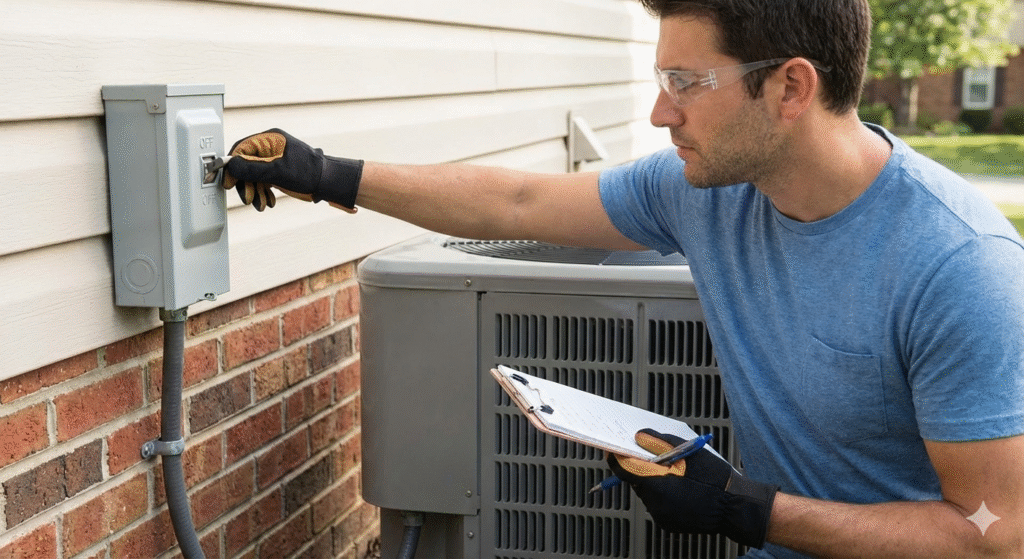
Crucial Safety Rule: Always turn the system’s power OFF at the thermostat AND at the dedicated circuit breaker before inspecting, cleaning, or touching any electrical components at the outdoor or indoor units. If you are unsure about any step, stop and call a professional.


What to Check First: The Most Common Electrical Causes
Diagnose in this order, starting with the simplest and most frequent solutions.
1. A Tripped Circuit Breaker or Blown Fuse
The dedicated circuit for your air conditioner can trip due to a power surge, lightning strike, or an internal electrical fault.
- What to Do: Go to your main electrical service panel (and any sub-panels). Look for the breaker labeled “AC,” “HVAC,” or “Condenser.” If it is in the middle (tripped) position, switch it fully OFF, then back ON. Do not force it. If it immediately trips again, there is an electrical fault—call a professional.
- For Older Homes with Fuses: Locate the fuse for the AC circuit. If the metal strip inside the glass window is broken or melted, the fuse is blown. It must be replaced with an identical type and amperage rating. If it blows again, call a professional.
2. The Outdoor Disconnect Switch Is Off
Located on an exterior wall near the outdoor unit, this is a small, often gray, metal or plastic box. It contains a pull-out fuse block or a simple switch to cut all power to the condenser for service.
- What to Do: Ensure the switch is in the ON position or that the fuse block is fully inserted. Sometimes these can be accidentally switched off or pulled out by landscaping work, animals, or during previous maintenance.
Intermediate Checks: System Controls and Safety Switches
If the main power is confirmed on, the issue may be with an interlock or safety device preventing operation.
3. A Tripped Condensate Safety Switch (Float Switch)
Your air conditioner removes humidity, creating condensation. This water drains away via a condensate drain line. If this line clogs, a safety device called a float switch or condensate overflow switch is triggered to prevent water overflow and damage.
- What it Does: This switch cuts power to the AC system when the water level in the drain pan is too high.
- What to Do: Find the indoor air handler (usually with your furnace). Look for a small plastic device with a float arm in the primary drain pan or in the drain line itself. If it’s tripped, the clog in the drain line must be cleared before the system can be reset. You may be able to carefully vacuum out the drain line’s access point (the “condensate trap”), but if the clog persists, a technician should be called.
4. A Faulty Contactor in the Outdoor Unit
The contactor is an electromagnetic switch in the outdoor unit that closes to send high-voltage power to the compressor and fan motor when signaled by the low-voltage thermostat. Over time, its contacts can burn, pit, or weld shut.
- Signs: You might hear a faint click from the outdoor unit (the thermostat relay) but no subsequent hum of the compressor or fan. Visually, with the power OFF, a technician can inspect the contactor for visible arcing damage.
- Professional Service Required: Testing and replacing the contactor involves working inside the high-voltage compartment of the outdoor unit. This is a job for a qualified HVAC technician.
Advanced Electrical Issues
These causes are less common for the average homeowner to diagnose but are typical reasons a professional technician would investigate.
5. Failed Start Capacitor
The capacitor gives the compressor and fan motor the extra jolt of energy needed to start spinning. A weak or failed capacitor is a very common reason an AC unit won’t start, though you may hear a humming sound.
- Signs: A humming noise from the outdoor unit that lasts a few seconds before stopping, or a breaker that trips when the AC tries to start. The capacitor itself may appear swollen or have leaked oil.
- Professional Service Required: Capacitors can hold a dangerous electrical charge even when power is off. Testing and replacement must be done by a professional.
6. A Locked-Out Compressor or Internal Overload
The compressor has internal protective devices. If it overheats due to low refrigerant, lack of airflow, or electrical issues, an internal thermal overload will trip and shut it down. It may need several hours to cool down and reset automatically.
- Associated Signs: This often follows periods of the system struggling (e.g., very poor cooling, freezing up) before a complete shutdown.
- What to Do: If you suspect this, turn the system OFF at the thermostat for 4-6 hours to allow it to cool. Then, ensure the air filter is clean and the outdoor coil is clear before attempting to turn it back on. If it runs briefly and stops again, a technician is needed to diagnose the root cause (like a refrigerant leak).
Practical Value: A Step-by-Step Diagnostic Checklist
Follow this sequence to safely gather information. Always prioritize safety and turn power OFF before inspections.
Initial Safety & Observation (Power ON at Thermostat):
- Observe Outdoor Unit: Is it completely silent? No hum, no fan movement?
- Observe Thermostat: Does the display work? Does it “click” when you lower the temperature setting?
Power Safety Checks (Turn Thermostat OFF, then proceed):
- Step 1: Main Circuit Breaker. Locate and check the AC breaker in your main panel. Reset if tripped.
- Step 2: Outdoor Disconnect. Verify the switch/lever is ON or the fuse block is fully inserted.
- Step 3: Indoor Air Handler/Furnace Power. Check for a separate switch or breaker for the indoor unit (often a light switch on the unit or nearby).
If Power is Confirmed, Check Safety Devices:
- Step 4: Condensate Safety Switch. Locate the switch near the indoor drain pan. Is the float stuck in the “up” (tripped) position? Is the drain pan full of water?
- Step 5: (For Advanced DIY) Visual Contactor Check. With power OFF at the breaker, you can remove the outer panel of the outdoor unit (consult your manual). Look for a small, black rectangular component with wires; check for obvious burning or pitting on the metal contacts. If unsure, do not proceed.
When to Stop and Call an HVAC Professional
It is time to call a certified technician if:
- A breaker trips immediately after being reset.
- You hear loud buzzing, humming, or clicking from the outdoor unit, but it doesn’t start.
- You see or smell burning, smoke, or see damaged/melted wires.
- You have performed the basic checks (breaker, disconnect, filter, drain switch) and the unit still does not respond.
- You are uncomfortable with any step in the process.
What to Tell the Technician: Report your findings clearly: “The thermostat has power, but the outdoor unit is completely dead. I’ve checked and reset the breaker at the panel and verified the outdoor disconnect is on. The filter is clean, and the condensate drain line appears clear.”
.