AC Keeps Shutting Off? Why It Short Cycles & How to Fix
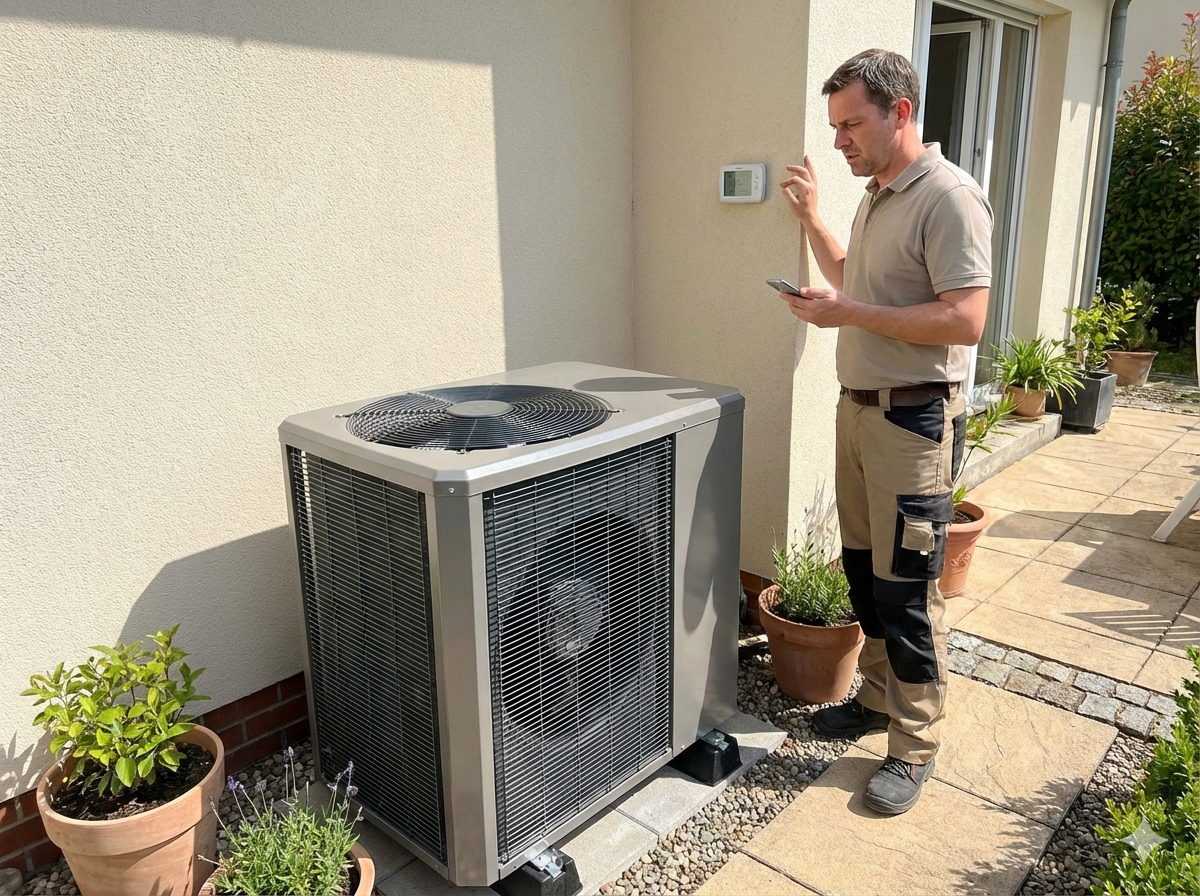
An air conditioner that keeps shutting off every few minutes, only to restart again shortly after, is experiencing a problem known as “short cycling.” This is more than just an annoyance; it is a serious operational fault that strains the compressor, wastes energy, and fails to properly cool or dehumidify your home. Short cycling significantly increases wear and tear and can lead to premature system failure.
This guide explains the mechanics of short cycling, why it is harmful, and systematically walks through its most common causes. You will learn to differentiate between issues you may resolve yourself and those requiring a professional HVAC technician. Understanding this behavior is key to protecting your system from damage and restoring consistent, efficient cooling.
First Step: Confirm Short Cycling and Observe the Pattern
Begin by confirming the behavior and noting specific details that will help with diagnosis.
- Timing: How long does the AC run before it shuts off? Is it 2-3 minutes, 5-10 minutes, or a variable time?
- Restart: Does it turn back on by itself after a few minutes, or does it stay off until you adjust the thermostat?
- Other Symptoms: Is the air coming from the vents cool or warm? Is there reduced airflow? Can you hear unusual noises (like buzzing or clicking) from the outdoor unit when it tries to start?
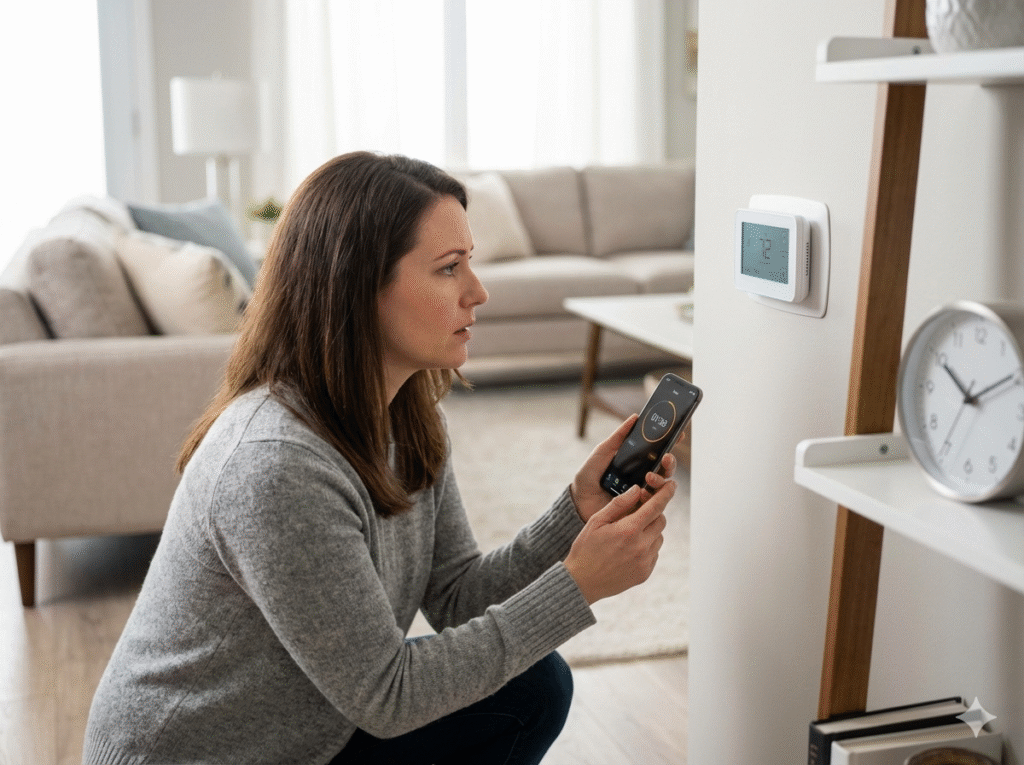
- Check the Thermostat: Ensure it is not in a programmed mode with conflicting settings.
What is Short Cycling and Why Is It Harmful?
A normal cooling cycle lasts 15-20 minutes or more. Short cycling occurs when the cycle is drastically shortened. The constant starting and stopping is the most stressful operation for an AC’s compressor, analogous to the wear caused by constantly stopping and starting a car engine on a highway. This leads to:
- Higher Energy Bills: The startup surge consumes more power than steady-state running.
- Inadequate Dehumidification: The system doesn’t run long enough to remove moisture from the air.
- Compressor Failure: The repeated stress and heat buildup can cause the most expensive component in your system to fail.
Related Posts

Common Cause #1: An Oversized Air Conditioner
This is a design flaw, not a breakdown. If your system has too much cooling capacity (too many tons/BTUs) for your home, it will satisfy the thermostat too quickly.
- Why it Causes Shutting Off: It cools the space so fast that the thermostat is satisfied in just a few minutes. The system shuts off, the temperature rises quickly, and it starts again, creating a relentless on/off loop.
- Signs: This problem has likely existed since the unit was installed. The home may feel humid even when cool.
Common Cause #2: Restricted Airflow or Overheating
If the system cannot move enough air, it can overheat and trigger a high-pressure switch or cause the evaporator coil to freeze, leading to a safety shut-off.
- Underlying Issues:
- Dirty Air Filter: The most common and easily fixed cause.
- Dirty or Blocked Evaporator Coil: Reduces heat absorption.
- Dirty Condenser Coil (Outdoor Unit): Prevents heat dissipation, causing high pressure.
- Failing Blower Motor: The indoor fan isn’t moving sufficient air.
- Result: The system overheats, a safety limit switch trips to prevent damage, and it shuts off. After cooling down, it resets and tries again.
Common Cause #3: Refrigerant Issues
An improper refrigerant charge disrupts the entire heat exchange process.
- Low Refrigerant (Leak): Causes the evaporator coil to become too cold and freeze. The ice eventually blocks airflow or triggers a low-pressure switch, shutting the system off.
- Overcharged System: Less common, but too much refrigerant can cause excessively high pressure, tripping the high-pressure safety switch.
- Signs: Often accompanied by ice on the indoor copper lines or outdoor unit and/or poor cooling performance.
Common Cause #4: Faulty Electrical Components or Sensors
Electrical components that are failing can send incorrect signals or fail under load.
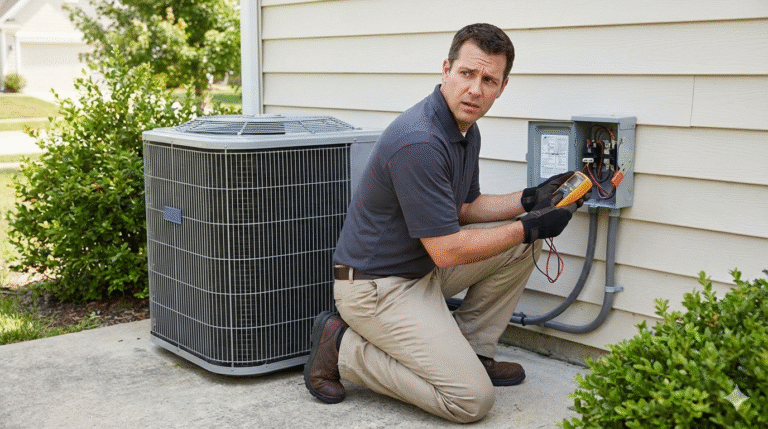
- Failing Contactor: This relay in the outdoor unit can have pitted contacts that overheat and break the electrical connection, causing shutdown, then reconnect as they cool.
- Bad Capacitor: A weak run capacitor can cause the compressor to over-amp and trip a safety breaker.
- Faulty Thermostat: A malfunctioning thermostat or one placed in a poor location (in direct sunlight, near a heat source) can misread room temperature and cycle the system erratically.
Practical Value: Homeowner Diagnostic Checklist
Follow these steps to gather information and potentially resolve simple issues. Turn power OFF at the breaker before inspecting any equipment.
Initial Observations:
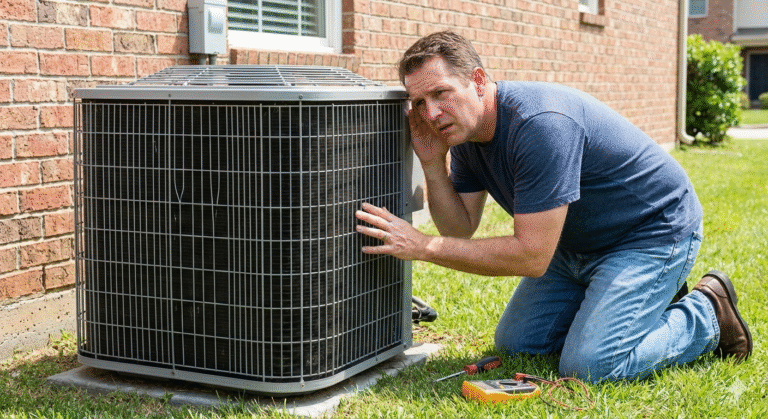
- Listen to the Outdoor Unit: When it shuts off, do you hear a click from the outdoor unit? (Could indicate a contactor or relay issue).
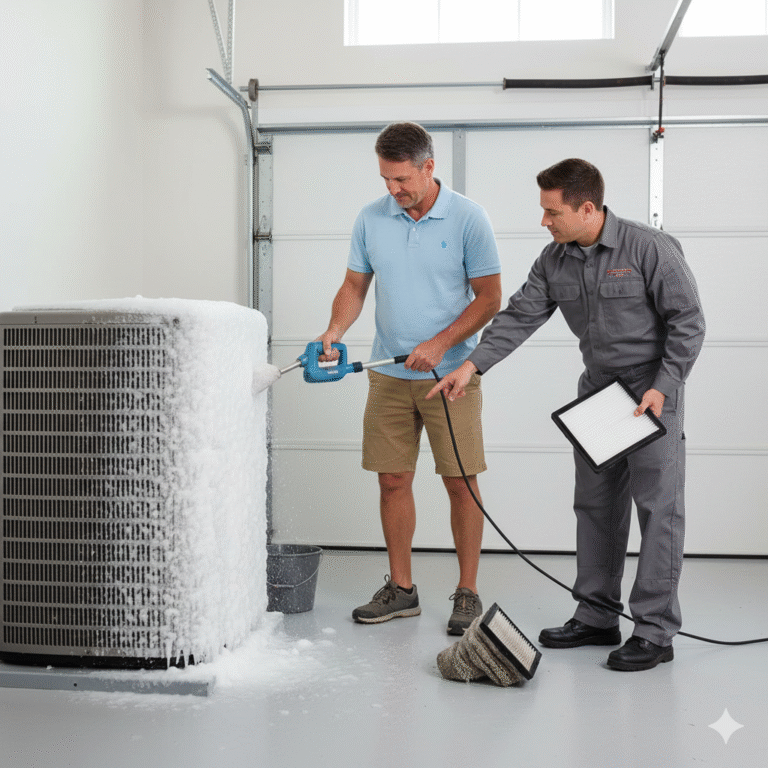
- Check for Ice: Inspect the larger, insulated copper line at the indoor unit. Is it covered in frost or ice?
Immediate Homeowner Actions:
- Replace the Air Filter: Install a clean filter regardless of its apparent condition.
- Clear Debris from Outdoor Unit: Ensure the condenser has 2-3 feet of clearance and that the coil is free of leaves and dirt.
- Check Thermostat Location & Settings: Ensure it’s not affected by direct sunlight, drafts, or electronics. Try switching the fan from “AUTO” to “ON” to see if the blower runs continuously (if it doesn’t, the blower motor may be faulty).
Monitor After Actions: After completing the checks, turn the system on and time the cycle. Has the runtime improved?

When to Call an HVAC Professional
Contact a certified technician if:
- The system continues to short cycle after you’ve changed the filter and cleared outdoor debris.
- You see ice on the refrigerant lines (indicating a likely refrigerant leak).
- The outdoor unit is extremely hot to the touch or you hear loud buzzing/clicking from it.
- You suspect the unit was incorrectly sized from installation.
- The problem involves electrical components like the contactor, capacitor, or pressure switches.
What a Professional Will Do to Diagnose Short Cycling
A technician will systematically rule out causes:
- Measure Airflow to check for restrictions.
- Check Refrigerant Pressures to identify undercharge, overcharge, or restriction.
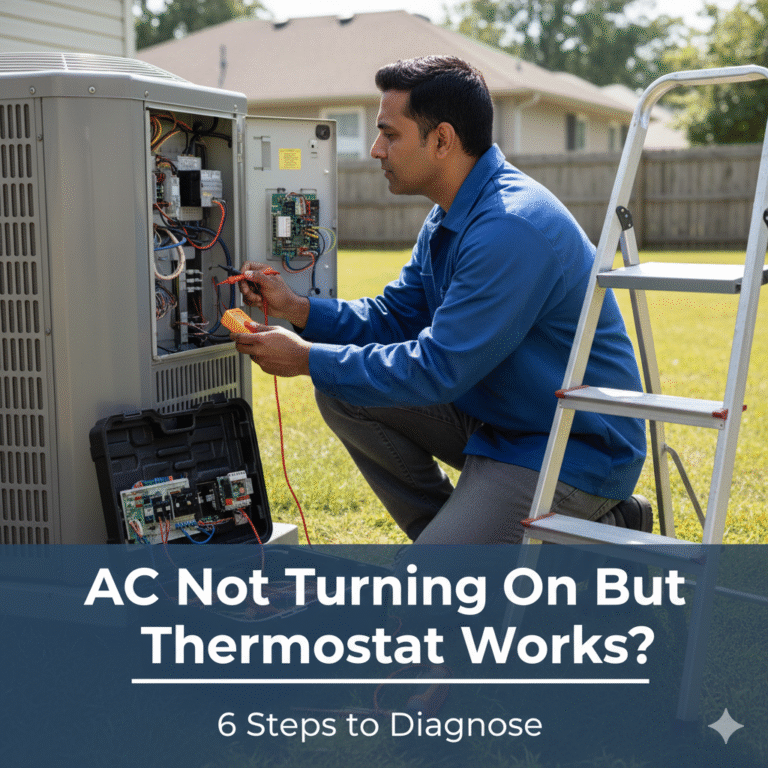
- Inspect Electrical Components for signs of overheating or failure.
- Evaluate System Sizing by reviewing the installation history and potentially performing a load calculation.
- Test Safety Switches and Thermostat for proper operation.