
How Often Should AC Be Serviced? The Ideal Maintenance Schedule

Establishing a regular maintenance schedule for your air conditioner is one of the most important decisions you can make as a homeowner. It directly impacts the system’s efficiency, lifespan, reliability, and even your indoor air quality. The core question—how often should AC be serviced—has a clear industry-standard answer, but the optimal frequency can also depend on your specific climate, system usage, and equipment type.
This guide explains the recommended service intervals for central air conditioning systems, heat pumps, and ductless mini-splits. You will learn what a professional preventative maintenance visit entails, the tangible benefits it provides, and which complementary maintenance tasks you can safely perform yourself. Understanding this schedule helps you prevent minor issues from becoming major repairs and ensures your system operates at peak performance for years to come.
The Standard Recommendation: Annual Professional Service
The HVAC industry and most manufacturers strongly recommend a professional AC tune-up once per year. For a standard central air conditioner or heat pump used for cooling, this service is ideally performed in the spring, before the peak cooling season begins.

- Why Annually? Over a season of operation, dust accumulates, electrical connections can loosen, refrigerant levels may drop slightly, and components experience normal wear. An annual check catches these issues proactively.
- The Goal: The technician’s objective is not to wait for a breakdown but to prevent it, optimize efficiency, and ensure safe operation.
Related Topic

Exceptions and Variations to the Annual Rule
- Heat Pumps: If your heat pump provides both heating and cooling year-round, it experiences twice the runtime of an AC-only system. In this case, bi-annual service (once in spring for cooling, once in fall for heating) is often recommended.
- Older Systems (10+ years): As systems age, they may benefit from more frequent checks (e.g., annually, with a mid-season follow-up) to monitor wearing components.
- Heavy-Use or Severe Climates: Homes in regions with very long, intense cooling seasons may also benefit from a pre-season and mid-season check.
- Ductless Mini-Splits: While often requiring less maintenance than ducted systems, an annual professional cleaning and check of the indoor and outdoor units is still advised to maintain efficiency and cleanliness.
What Happens During a Professional AC Tune-Up?
A comprehensive professional service, often called a “seasonal tune-up” or “preventative maintenance visit,” should be a systematic inspection, cleaning, and testing process. Here is what a reputable technician typically does:
Inspection & Cleaning Tasks:
- Inspect & Clean Condenser Coils: The outdoor coil is cleaned of dirt and debris, which is crucial for efficient heat rejection.
- Inspect & Clean Evaporator Coil (if accessible): The indoor coil is checked and cleaned to ensure proper heat absorption and airflow.
- Clean & Clear Condensate Drain System: The drain line and pan are cleared of algae and sludge to prevent clogs and water leaks.
- Inspect Electrical Components: All wiring, connections, the contactor, and capacitors are checked for signs of wear, overheating, or corrosion.
- Check Refrigerant Charge: Using gauges, the technician measures the refrigerant pressure to ensure it matches the manufacturer’s specification. This can identify a refrigerant leak.
- Lubricate Moving Parts: Motors and bearings that require lubrication are serviced (though many newer models have sealed bearings).
Testing & Measurement Tasks:
- Check System Controls & Thermostat: The starting cycle and operation sequence are verified for correctness.
- Measure Temperature Drop: The difference between return and supply air temperatures is measured to assess cooling performance.
- Check Blower Motor & Airflow: The indoor blower is inspected, and airflow is verified to ensure it meets specifications.
- Measure Voltage & Amperage: Electrical readings are taken on the compressor and fan motors to ensure they are operating within safe, efficient ranges.
- Inspect Ductwork (visual): Accessible ducts are checked for obvious leaks, gaps, or insulation issues.
The Practical Benefits of Regular AC Service
Investing in annual maintenance provides measurable returns that far outweigh the cost of the service visit.
- Maintains Peak Efficiency: A clean, calibrated system uses less electricity to cool your home. This directly translates to lower monthly energy bills, often enough to offset the service cost.
- Prevents Costly Breakdowns: Catching a worn capacitor, a dirty coil, or a minor refrigerant leak early can prevent a catastrophic compressor failure—the most expensive repair in an AC system.
- Extends System Lifespan: Reducing strain and fixing small issues allows the system to operate as designed, potentially adding years to its service life.
- Ensures Safety: Electrical inspections prevent fire hazards, and checking the condensate drain prevents water damage and mold growth.
- Preserves Warranty: Many manufacturers require proof of regular maintenance to keep the equipment warranty valid.
What Homeowners Can (and Should) Do Between Professional Visits
To support your annual professional service, adopt these key DIY maintenance habits:
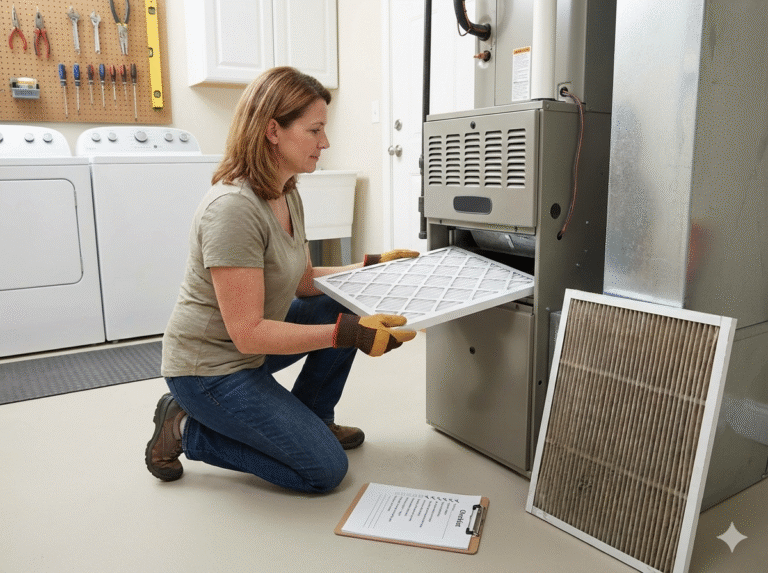
- Monthly Filter Changes (During Peak Season): This is the single most important homeowner task. A clean filter protects the evaporator coil and maintains proper airflow. Check it monthly and replace it when dirty, typically every 1-3 months.
- Keep the Outdoor Unit Clear: Maintain at least 2-3 feet of clearance around the condenser. Regularly remove leaves, grass clippings, and debris. Gently rinse the coil with a garden hose (power OFF) if it’s visibly dirty.
- Clear Condensate Drain Line: Periodically pour a cup of vinegar into the drain line access port to inhibit algae growth and prevent clogs.
- Ensure Vents are Open and Unobstructed: Avoid closing more than 20% of your home’s supply vents, as this can restrict airflow and harm the system.

Is an Annual Maintenance Plan Worth It?
Many HVAC companies offer annual maintenance plans or service agreements. These typically provide:
- Priority scheduling and discounted repair rates.
- One or two scheduled tune-ups per year.
- Often, a waiver of diagnostic fees.
For many homeowners, especially with older systems or in severe climates, the convenience, cost predictability, and priority service can make these plans a valuable investment.